

Triptolide inhibits ovarian cancer growth and metastasis via reprogramming of tumor-associated macrophages
For full text please see pdf.

Cell Stress
Cell Stress (CES) emerges as a peer-reviewed publishing platform for high-impact research. CES publishes articles of extraordinary novelty and significance, including research papers and reviews that cover heterogenous topics in the field of cellular pathophysiology.
MicroRNA as key players in skin regeneration and anti-aging pathways
Azizi et al.For full text please see pdf.
Stress management by benzodiazepines in septic shock and critical illness: mechanistic and clinical evidence supporting alternative sedative strategies
Lambertucci et al.For full text please see pdf.
Triptolide inhibits ovarian cancer growth and metastasis via reprogramming of tumor-associated macrophages
Chen et al.For full text please see pdf.
The IRE1α-XBP1s-NFκB axis controls cell survival and epithelial differentiation under osmotic stress through arachidonic acid metabolism activation
Parra et al.Arachidonic acid (AA) metabolism plays a critical role in renal cell osmoadaptation. We recently demonstrated that hypertonicity induces the expression and activation of cytosolic phospholipase A2 (cPLA2). On one hand, AA released by cPLA2 enhances triacylglyceride (TG) synthesis and accumulation. On the other hand, AA is converted into prostaglandins (PG) through cyclooxygenase 2 (COX2) activity. Both processes are required for renal cell survival under osmotic stress. However, the mechanisms by which hypertonicity induces cPLA2 expression remain poorly understood. Given that we previously shown that hypertonicity regulates TG synthesis through the IRE1α-XBP1s branch of the unfolded protein (…)
Multifaceted role of CNPY2 beyond ER stress: Disease implications and therapeutic potential
Ebadollahibaruq et al.This review meticulously dissects CNPY2’s structural characteristics, expression patterns, and biological functions across various disorders, emphasizing its role on tumor initiation, microenvironmental stress, and chemoresistance, and evaluating its potential as a therapeutic target.
Antifungal peptides: from modes of action to synergistic and immunologic potential
Carmona-Gutierrez et al.Reversal of Cushing syndrome by antibody-mediated neutralization of ACBP/DBI
Shen et al.For full text please see pdf.
The role of hydrophobic matching on transmembrane helix packing in cells
Grau et al.INTRODUCTION Assembly of the native structure of most integral membrane proteins takes place in two main steps [cite source=’pubmed’]1694455[/cite]. The first step includes targeting and insertion of the protein into a lipid membrane. In the
mIDH-associated DNA hypermethylation in acute myeloid leukemia reflects differentiation blockage rather than inhibition of TET-mediated demethylation
Wiehle et al.INTRODUCTION Isocitrate dehydrogenase enzymes IDH1 and IDH2 are two closely related enzymes that convert isocitrate to α-ketoglutarate in the tricarboxylic acid (TCA) cycle. The genes encoding IDH1 and IDH2 are recurrently mutated in different cancer
The long non-coding RNA H19 suppresses carcinogenesis and chemoresistance in hepatocellular carcinoma
Schultheiss et al.The long non-coding RNA (lncRNA) H19 represents a maternally expressed and epigenetically regulated imprinted gene product and is discussed to have either tumor-promoting or tumor-suppressive actions. Recently, H19 was shown to be regulated under inflammatory conditions. Therefore, aim of this study was to determine the function of H19 in hepatocellular carcinoma (HCC), an inflammation-associated type of tumor. In four different human HCC patient cohorts H19 was distinctly downregulated in tumor tissue compared(…)
Regulation of immune checkpoint blockade efficacy in breast cancer by FIP200: A canonical-autophagy-independent function
Yeo and GuanDISSECTING THE ROLE OF AUTOPHAGY AND AUTOPHAGY-INDEPENDENT FUNCTIONS OF FIP200 IN BREAST CANCER Although initial studies of autophagy genes in cancer implicated a tumor suppressive role, it has become apparent from studies in mouse models
High mitochondrial calcium levels precede neuronal death in vivo in Alzheimer’s disease
Calvo-Rodriguez and BacskaiMITOCHONDRIAL CALCIUM OVERLOAD AFTER PLAQUE DEPOSITION Ca2+ is essential for the normal function of mitochondrial activity, and therefore Ca2+ levels are tightly regulated in mitochondria. However, excessive levels of Ca2+ in mitochondria, i.e. mitochondrial Ca2+
The role of lipids in autophagy and its implication in neurodegeneration
Hernandez-Diaz and SoukupNeurodegenerative diseases are, at present, major socio-economic burdens without effective treatments and their increasing prevalence means that these diseases will be a challenge for future generations. Neurodegenerative diseases may differ in etiology and pathology but are often caused by the accumulation of dysfunctional and aggregation-prone proteins. Autophagy, a conserved cellular mechanism, deals with cellular stress and waste product build-up and has been shown to reduce the accumulation of dysfunctional proteins in animal models of neurodegenerative diseases. Historically, progress in understanding the precise function of lipids has traditionally been far behind other biological molecules (like proteins) but emerging works demonstrate the importance of lipids in the autophagy pathway and how the disturbance of lipid metabolism is connected to neurodegeneration. Here we review how altered autophagy and the disturbance of lipid metabolism, particularly of phosphoinositols and sphingolipids, feature in neurodegenerative diseases and address work from the field that suggests that these potentially offer an opportunity of therapeutic intervention.
Immune system activation by natural products and complex fractions: a network pharmacology approach in cancer treatment
Gomez-Cadena <iet al.INTRODUCTION Over the past decade, immunotherapy has become a promising approach to treat cancer and is now being combined with standard chemotherapy and immune response activators to improve the outcome for cancer patients [1]. However,
Towards understanding the role of Receptor Expression Enhancing Protein 5 (REEP5) in cardiac muscle and beyond
Lee et al.DISCOVERY OF REEP5 Cardiac membrane proteins play an important role in regulating normal beat-to-beat function of the heart given their importance in coordinating spontaneous contractions of cardiomyocytes in the heart. In hopes of discovering novel
Role of RNA Binding Proteins with prion-like domains in muscle and neuromuscular diseases
Picchiarelli and DupuisA number of neuromuscular and muscular diseases, including amyotrophic lateral sclerosis (ALS), spinal muscular atrophy (SMA) and several myopathies, are associated to mutations in related RNA-binding proteins (RBPs), including TDP-43, FUS, MATR3 or hnRNPA1/B2. These proteins harbor similar modular primary sequence with RNA binding motifs and low complexity domains, that enables them to phase separate and create liquid microdomains. These RBPs have been shown to critically regulate multiple events of RNA lifecycle, including transcriptional events, splicing and RNA trafficking and sequestration. Here, we review the roles of these disease-related RBPs in muscle and motor neurons, and how their dysfunction in these cell types might contribute to disease.
Biomechanical stress regulates mammalian tooth replacement
Wu and WangThe DT eruption released a biomechanical stress of about 3-20 kPa inside the mandible. By culturing the mandible slice in vitro, the SDL of the PT immediately transitioned into the bud stage. However, the initiation
Poly(ADP-ribose) polymerase-1 and its ambiguous role in cellular life and death
Castedo et alThe deletion of the gene coding for poly(ADPribose) polymerase-1 (PARP1) or its pharmacological inhibition protects mice against cerebral ischemia and Parkinson’s disease. In sharp contrast, PARP1 inhibitors are in clinical use for the eradication of vulnerable cancer cells. It appears that excessive PARP1 activation is involved in a specific cell death pathway called parthanatos, while inhibition of PARP1 in cancer cells amplifies DNA damage to a lethal level. Hence, PARP1 plays a context-dependent role in cell fate decisions. In addition, it appears that PARP1 plays an ambiguous role in organismal aging.
Cardiac PI3K p110α attenuation delays aging and extends lifespan
Abdellatif et alPhosphoinositide 3-kinase (PI3K) is a key component of the insulin signaling pathway that controls cellular me-tabolism and growth. Loss-of-function mutations in PI3K signaling and other downstream effectors of the insulin signaling pathway extend the lifespan of various model organisms. However, the pro-longevity effect appears to be sex-specific and young mice with reduced PI3K signaling have increased risk of cardiac disease. Hence, it remains elusive as to whether PI3K inhibition is a valid strategy to delay aging and extend healthspan in humans. We recently demonstrated that reduced PI3K activity in cardiomyocytes delays cardiac growth, causing subnormal contractility and cardiopulmonary functional capacity, as well as increased risk of mortality at young age. In stark contrast, in aged mice, experimental attenuation of PI3K signaling reduced the age-dependent decline in cardiac function and extended maximal lifespan, suggesting (…)
A purinergic call to arms from dying brown adipocytes
Mohammed K. HankirBrown adipocytes react to temperature and nutritional challenges by ramping up their metabolism and generating heat. This adaptation to changes in the environment is crucial for defending organismal homeostasis, but is impaired in obesity and during aging. Writing in Nature, Niemann et al. show that brown adipocytes become apoptotic under thermoneutral conditions and release ATP, which in turn is converted extracellularly into inosine. They further present evidence that pharmacological and genetic manipulations that enhance signalling of this purine metabolite stimulates thermo-genesis in brown adipocytes and promotes metabolic health.
Spermidine supplementation in rare translation-associated disorders
Zimmermann et al.Spermidine is a naturally occurring polyamine that is strongly involved in manifold cellular processes, for example, DNA, RNA and protein stabilization, cell growth, proliferation, autophagy, and aging. Importantly, spermidine has also been connected to the
Exploiting the circuit breaker cancer evolution model in human clear cell renal cell carcinoma
Hsieh and ChengINTRODUCTION On average a human adult body encompasses fifty trillion cells (~5×10¹³) with a daily turnover of hundred billion cells (~1011) within which each contains two copies of ~three billion base-pair DNA haploid genome. Approximately,
Can’t find what you’re looking for?
You can browse all our issues and published articles here.
FAQs
Peer-reviewed, open-access research using unicellular organisms (and multicellular microorganisms) to understand cellular responses and human disease.
The journal (founded in 2014) is led by its Editors-in-Chief Frank Madeo, Didac Carmona-Gutierrez, and Guido Kroemer
Microbial Cell has been publishing original scientific literature since 2014, and from the very beginning has been managed by active scientists through an independent Publishing House (Shared science Publishers). The journal was conceived as a platform to acknowledge the importance of unicellular organisms, both as model systems as well as in the biological context of human health and disease.
Ever since, Microbial Cell has very positively developed and strongly grown into a respected journal in the unicellular research community and even beyond. This scientific impact is reflected in the yearly number of citations obtained by articles published in Microbial Cell, as recorded by the Web of Science (Clarivate, formerly Thomson/Reuters):
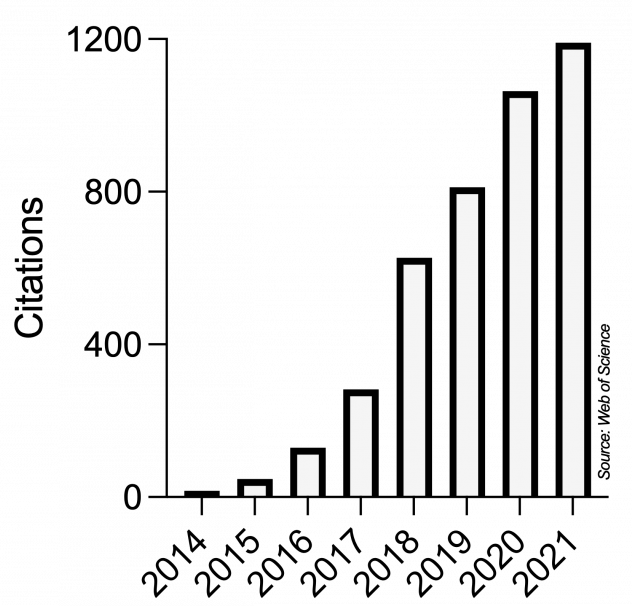
The scientific impact of Microbial Cell is also mirrored in a series of milestones:
2015: Microbial Cell is included in the Emerging Sources Citation Index (ESCI), a selection of developing journals drafted by Clarivate Analytics based on the candidate’s publishing standards, quality, editorial content, and citation data. Note: As an ESCI-selected journal, Microbial Cell is currently being evaluated in a rigorous and long process to determine an inclusion in the Science Citation Index Expanded (SCIE), which allows the official calculation of Clarivate Analytics’ impact factor.

2016: Microbial Cell is awarded the so-called DOAJ Seal by the selective Directory of Open Access Journals (DOAJ). The DOAJ Seal is an exclusive mark of certification for open access journals granted by DOAJ to journals that adhere to outstanding best practice and achieve an extra high and clear commitment to open access and high publishing standards.

2017: Microbial Cell is included in Pubmed Central (PMC), allowing the archiving of all the journal’s articles in PMC and PubMed.

2019: Microbial Cell is indexed in the prestigious abstract and citation database Scopus after a thorough selection process. This also means that Microbial Cell obtains, for the first time, an official Scopus CiteScore as well as an official journal ranking in the Scimago Journal and Country Ranking.

2022: Microbial Cell’s CiteScore reaches a value of 7.2 for the year 2021, positioning Microbial Cell among the top microbiology journals (previously available CiteScores: 2019: 5.4; 2020: 5.1).

2022: Microbial Cell is indexed in the highly selective Science Citation Index Expanded™, which covers approx. 9,500 of the world’s most impactful journals across 178 scientific disciplines. In their journal selection and curation process, Clarivate´s editors apply 24 ‘quality’ criteria and four ‘impact’ criteria to select the most influential journals in their respective fields. This selection is also a pre-requisite for inclusion in the JCR, which features the impact factor.

2022: Microbial Cell is listed in the Journal Citation Reports™ (JCR), and obtains its first official Journal Impact Factor™ (JIF) for the year 2021: 5.316.Check Article Types and Manuscript Preparation guidelines. Submit online via Scholastica.