

Triptolide inhibits ovarian cancer growth and metastasis via reprogramming of tumor-associated macrophages
For full text please see pdf.

Cell Stress
Cell Stress (CES) emerges as a peer-reviewed publishing platform for high-impact research. CES publishes articles of extraordinary novelty and significance, including research papers and reviews that cover heterogenous topics in the field of cellular pathophysiology.
MicroRNA as key players in skin regeneration and anti-aging pathways
Azizi et al.For full text please see pdf.
Stress management by benzodiazepines in septic shock and critical illness: mechanistic and clinical evidence supporting alternative sedative strategies
Lambertucci et al.For full text please see pdf.
Triptolide inhibits ovarian cancer growth and metastasis via reprogramming of tumor-associated macrophages
Chen et al.For full text please see pdf.
The IRE1α-XBP1s-NFκB axis controls cell survival and epithelial differentiation under osmotic stress through arachidonic acid metabolism activation
Parra et al.Arachidonic acid (AA) metabolism plays a critical role in renal cell osmoadaptation. We recently demonstrated that hypertonicity induces the expression and activation of cytosolic phospholipase A2 (cPLA2). On one hand, AA released by cPLA2 enhances triacylglyceride (TG) synthesis and accumulation. On the other hand, AA is converted into prostaglandins (PG) through cyclooxygenase 2 (COX2) activity. Both processes are required for renal cell survival under osmotic stress. However, the mechanisms by which hypertonicity induces cPLA2 expression remain poorly understood. Given that we previously shown that hypertonicity regulates TG synthesis through the IRE1α-XBP1s branch of the unfolded protein (…)
Multifaceted role of CNPY2 beyond ER stress: Disease implications and therapeutic potential
Ebadollahibaruq et al.This review meticulously dissects CNPY2’s structural characteristics, expression patterns, and biological functions across various disorders, emphasizing its role on tumor initiation, microenvironmental stress, and chemoresistance, and evaluating its potential as a therapeutic target.
Antifungal peptides: from modes of action to synergistic and immunologic potential
Carmona-Gutierrez et al.Reversal of Cushing syndrome by antibody-mediated neutralization of ACBP/DBI
Shen et al.For full text please see pdf.
Cold exposure reinstates NAD+ levels and attenuates hepatocellular carcinoma
Grazioso et al.INTRODUCTION Hepatocellular carcinoma (HCC) is the most common type of primary malignant tumor that arises from hepatocytes, the main functional cells of the liver 1. It is a leading cause of cancer-related deaths worldwide, with
Endogenous plasma resuspension of peripheral blood mononuclear cells prevents preparative-associated stress that modifies polyA-enriched RNA responses to subsequent acute stressors
Li et al.INTRODUCTION Cells are impacted by complex and co-occurring stresses throughout a life-course. Our goal was to generate physiologically relevant models of acute cellular stress, initially in relation to 3’ untranslated regions (3’UTRs), as these can
Neuroglobin-enriched secretome provides neuroprotection against hydrogen peroxide and mitochondrial toxin-induced cellular stress
Bastari et al.INTRODUCTION Cellular response to stress relies on evolutionary conserved mechanisms aimed at maintaining homeostasis and facilitating adaptation to new cellular environments 1. Under stressful conditions, post-mitotic neurons are hardly replaced. Rather, mature neurons exhibit two
Stress granules formation in HEI-OC1 auditory cells and in H4 human neuroglioma cells secondary to cisplatin exposure
Abdelrasol, Chopra et al.INTRODUCTION Cellular stress is an inherent and inevitable aspect of cell physiology, prompting cells to adapt to environmental changes. Among the distinctive intracellular adaptive responses that have been characterized in intricate molecular detail in response
Dynamics of cell membrane lesions and adaptive conductance under the electrical stress
Silkunas et al.Exceeding physiological limits of the cell membrane potential compromises structural integrity, enabling the passage of normally impermeant solutes and disrupting cell function. Electropermeabilization has been studied extensively at the cellular scale, but not at the individual membrane lesion level. We employed fast total internal reflection fluorescence (TIRF) imaging of Ca2+ entry transients to discern individual lesions in a hyperpolarized cell membrane and characterize their focality, thresholds, electrical conductance, and the lifecycle. A diffuse and momentary membrane permeabilization without a distinct pore formation was observed already at a -100 mV threshold. Polarizing down to -200 mV created focal pores with a low 50- to 300-pS conductance, which disappeared instantly once the hyperpolarization was removed. Charging to – 240 mV created high-conductance (> 1 nS) pores which persisted for seconds even at zero membrane potential. With (…)
MiR-200c reprograms fibroblasts to recapitulate the phenotype of CAFs in breast cancer progression
Lin et al.Mesenchymal-epithelial plasticity driving cancer progression in cancer-associated fibroblasts (CAFs) is undetermined. This work identifies a subgroup of CAFs in human breast cancer exhibiting mesenchymal-to-epithelial transition (MET) or epithelial-like profile with high miR-200c expression. MiR-200c overexpression in fibroblasts is sufficient to drive breast cancer aggressiveness. Oxidative stress in the tumor microenvironment induces miR-200c by DNA demethylation. Proteomics, RNA-seq and functional analyses reveal that miR-200c is a novel positive regulator of NFκB-HIF signaling via COMMD1 downregulation and stimulates pro-tumorigenic inflammation and glycolysis. Reprogramming fibroblasts toward MET via miR-200c reduces stemness and induces (…)
A versatile method for the identification of senolytic compounds
Annunziata et al.The increased burden of senescent cells is as a well-established hallmark of aging and age-related diseases. This finding sparked significant interest in the identification of molecules capable of selectively eliminating senescent cells, so-called senolytics. Here, we fine-tuned a method for the identification of senolytics that is compatible with high-content fluorescence microscopy. We used spectral detector imaging to measure the emission spectrum of unlabeled control or senescent cells. We observed that senescent cells exhibited higher levels of autofluorescence than their non-senescent counterparts, particularly in the cytoplasmic region. Building on this result, we devised a senolytic assay based on co-culturing quiescent and senescent cells, fluorescently tagged in the nuclear region through the overexpression of H2B-GFP and H2B-RFP, respectively. We validated this approach by showing that first generation senolytics were effective in reducing the (…)
Chromatin assembly factor-1 preserves genome stability in ctf4∆ cells by promoting sister chromatid cohesion
Ghaddar et al.Chromatin assembly and the establishment of sister chromatid cohesion are intimately connected to the progression of DNA replication forks. Here we examined the genetic interaction between the heterotrimeric chromatin assembly factor-1 (CAF-1), a central component of chromatin assembly during replication, and the core replisome component Ctf4. We find that CAF-1 deficient cells as well as cells affected in newly-synthesized H3-H4 histones deposition during DNA replication exhibit a severe negative growth with ctf4∆ mutant. We dissected the role of CAF-1 in the maintenance of genome stability in ctf4∆ yeast cells. In the absence of CTF4, CAF-1 is essential for viability in cells experiencing replication problems, in cells lacking functional S-phase checkpoint or functional spindle checkpoint, and in cells lacking DNA repair pathways involving homologous recombination. We present evidence that CAF-1 affects cohesin association to chromatin in a (…)
Regulation of immune checkpoint blockade efficacy in breast cancer by FIP200: A canonical-autophagy-independent function
Yeo and GuanDISSECTING THE ROLE OF AUTOPHAGY AND AUTOPHAGY-INDEPENDENT FUNCTIONS OF FIP200 IN BREAST CANCER Although initial studies of autophagy genes in cancer implicated a tumor suppressive role, it has become apparent from studies in mouse models
High mitochondrial calcium levels precede neuronal death in vivo in Alzheimer’s disease
Calvo-Rodriguez and BacskaiMITOCHONDRIAL CALCIUM OVERLOAD AFTER PLAQUE DEPOSITION Ca2+ is essential for the normal function of mitochondrial activity, and therefore Ca2+ levels are tightly regulated in mitochondria. However, excessive levels of Ca2+ in mitochondria, i.e. mitochondrial Ca2+
The role of lipids in autophagy and its implication in neurodegeneration
Hernandez-Diaz and SoukupNeurodegenerative diseases are, at present, major socio-economic burdens without effective treatments and their increasing prevalence means that these diseases will be a challenge for future generations. Neurodegenerative diseases may differ in etiology and pathology but are often caused by the accumulation of dysfunctional and aggregation-prone proteins. Autophagy, a conserved cellular mechanism, deals with cellular stress and waste product build-up and has been shown to reduce the accumulation of dysfunctional proteins in animal models of neurodegenerative diseases. Historically, progress in understanding the precise function of lipids has traditionally been far behind other biological molecules (like proteins) but emerging works demonstrate the importance of lipids in the autophagy pathway and how the disturbance of lipid metabolism is connected to neurodegeneration. Here we review how altered autophagy and the disturbance of lipid metabolism, particularly of phosphoinositols and sphingolipids, feature in neurodegenerative diseases and address work from the field that suggests that these potentially offer an opportunity of therapeutic intervention.
Immune system activation by natural products and complex fractions: a network pharmacology approach in cancer treatment
Gomez-Cadena <iet al.INTRODUCTION Over the past decade, immunotherapy has become a promising approach to treat cancer and is now being combined with standard chemotherapy and immune response activators to improve the outcome for cancer patients [1]. However,
Towards understanding the role of Receptor Expression Enhancing Protein 5 (REEP5) in cardiac muscle and beyond
Lee et al.DISCOVERY OF REEP5 Cardiac membrane proteins play an important role in regulating normal beat-to-beat function of the heart given their importance in coordinating spontaneous contractions of cardiomyocytes in the heart. In hopes of discovering novel
Role of RNA Binding Proteins with prion-like domains in muscle and neuromuscular diseases
Picchiarelli and DupuisA number of neuromuscular and muscular diseases, including amyotrophic lateral sclerosis (ALS), spinal muscular atrophy (SMA) and several myopathies, are associated to mutations in related RNA-binding proteins (RBPs), including TDP-43, FUS, MATR3 or hnRNPA1/B2. These proteins harbor similar modular primary sequence with RNA binding motifs and low complexity domains, that enables them to phase separate and create liquid microdomains. These RBPs have been shown to critically regulate multiple events of RNA lifecycle, including transcriptional events, splicing and RNA trafficking and sequestration. Here, we review the roles of these disease-related RBPs in muscle and motor neurons, and how their dysfunction in these cell types might contribute to disease.
Biomechanical stress regulates mammalian tooth replacement
Wu and WangThe DT eruption released a biomechanical stress of about 3-20 kPa inside the mandible. By culturing the mandible slice in vitro, the SDL of the PT immediately transitioned into the bud stage. However, the initiation
Mitochondria organize the cellular proteostatic response and promote cellular senescence
Li et al.Timely disposal and degradation of misfolded proteins and their aggregates is critical for cellular proteostasis and the well-being of a cell. During evolution, cells have acquired a sophisticated system to monitor protein quality and maintain
Could de-stressing the brain be the solution for long-term weight loss?
Seyfried and HankirINTRODUCTION One just needs to take a look at a typical vending machine (often found in hospitals) to appreciate what has happened to our food and drink. The relatively sudden widespread ease of access to
Base editors: a powerful tool for generating animal models of human diseases
Lu and HuangBASE EDITORS: A NOVEL GENOME ENGINEERING TOOL Genetically engineered mouse models of human diseases have long been used in understanding the underlying mechanisms of the clinically relevant genetic disorders. In the past, using gene-targeting technology
Unweaving the role of nuclear Lamins in neural circuit integrity
Deal and YamamotoStructural integrity of the nuclear membrane is essential for the homeostasis of eukaryotic cells. Critical components of this process are Lamins or type-V intermediate filament proteins that form a meshwork on the inner nuclear membrane
Alzheimer’s disease: amyloid-based pathogenesis and potential therapies
Zhou et al.INTRODUCTION Alzheimer’s disease (AD) is one of the most prevalent forms of dementia; in 2015, for example, AD affected ~46.8 million people worldwide. It is estimated that this number will continue to increase and reach
Membrane closure in stress induced-autophagosome formation
MoritaAutophagy (macroautophagy) is a bulk degradation system that sequesters cytoplasmic components by generating double-layered isolation membranes and delivering these isolated contents to the lysosomes [cite]10.1146/annurev-cellbio-092910-154005[/cite]. Though this pathway was originally identified as a system essential
Centriolar satellites prevent uncontrolled degradation of centrosome proteins: a speculative review
Lecland and MerdesINTRODUCTION Centrosomes are cytoplasmic structures that serve as primary microtubule organizing centers in a large variety of animal cells. They consist of a pair of cylindrically shaped centrioles, surrounded by pericentriolar material. Since the 1950s,
Novel role of the SIRT4-OPA1 axis in mitochondrial quality control
Lang and PiekorzAging is defined by various molecular and cellular hallmarks, among them stem cell exhaustion, genomic instability, altered proteostasis, cellular senescence, and mitochondrial dysfunction [cite]10.1016/j.cell.2013.05.039[/cite]. Mitochondrial defects are considered major drivers of cellular aging and are
Can’t find what you’re looking for?
You can browse all our issues and published articles here.
FAQs
Peer-reviewed, open-access research using unicellular organisms (and multicellular microorganisms) to understand cellular responses and human disease.
The journal (founded in 2014) is led by its Editors-in-Chief Frank Madeo, Didac Carmona-Gutierrez, and Guido Kroemer
Microbial Cell has been publishing original scientific literature since 2014, and from the very beginning has been managed by active scientists through an independent Publishing House (Shared science Publishers). The journal was conceived as a platform to acknowledge the importance of unicellular organisms, both as model systems as well as in the biological context of human health and disease.
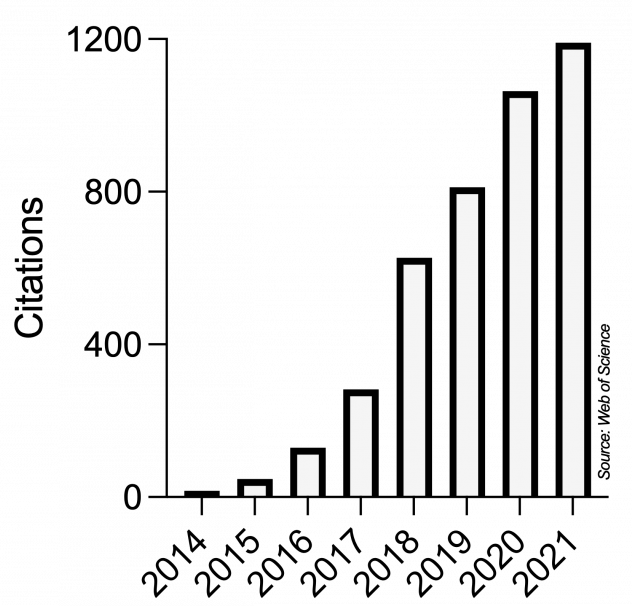
Ever since, Microbial Cell has very positively developed and strongly grown into a respected journal in the unicellular research community and even beyond. This scientific impact is reflected in the yearly number of citations obtained by articles published in Microbial Cell, as recorded by the Web of Science (Clarivate, formerly Thomson/Reuters):
The scientific impact of Microbial Cell is also mirrored in a series of milestones:
2015: Microbial Cell is included in the Emerging Sources Citation Index (ESCI), a selection of developing journals drafted by Clarivate Analytics based on the candidate’s publishing standards, quality, editorial content, and citation data. Note: As an ESCI-selected journal, Microbial Cell is currently being evaluated in a rigorous and long process to determine an inclusion in the Science Citation Index Expanded (SCIE), which allows the official calculation of Clarivate Analytics’ impact factor.

2016: Microbial Cell is awarded the so-called DOAJ Seal by the selective Directory of Open Access Journals (DOAJ). The DOAJ Seal is an exclusive mark of certification for open access journals granted by DOAJ to journals that adhere to outstanding best practice and achieve an extra high and clear commitment to open access and high publishing standards.

2017: Microbial Cell is included in Pubmed Central (PMC), allowing the archiving of all the journal’s articles in PMC and PubMed.

2019: Microbial Cell is indexed in the prestigious abstract and citation database Scopus after a thorough selection process. This also means that Microbial Cell obtains, for the first time, an official Scopus CiteScore as well as an official journal ranking in the Scimago Journal and Country Ranking.

2022: Microbial Cell’s CiteScore reaches a value of 7.2 for the year 2021, positioning Microbial Cell among the top microbiology journals (previously available CiteScores: 2019: 5.4; 2020: 5.1).

2022: Microbial Cell is indexed in the highly selective Science Citation Index Expanded™, which covers approx. 9,500 of the world’s most impactful journals across 178 scientific disciplines. In their journal selection and curation process, Clarivate´s editors apply 24 ‘quality’ criteria and four ‘impact’ criteria to select the most influential journals in their respective fields. This selection is also a pre-requisite for inclusion in the JCR, which features the impact factor.

2022: Microbial Cell is listed in the Journal Citation Reports™ (JCR), and obtains its first official Journal Impact Factor™ (JIF) for the year 2021: 5.316.Check Article Types and Manuscript Preparation guidelines. Submit online via Scholastica.