
Triptolide inhibits ovarian cancer growth and metastasis via reprogramming of tumor-associated macrophages
For full text please see pdf.

Cell Stress
Cell Stress (CES) emerges as a peer-reviewed publishing platform for high-impact research. CES publishes articles of extraordinary novelty and significance, including research papers and reviews that cover heterogenous topics in the field of cellular pathophysiology.
MicroRNA as key players in skin regeneration and anti-aging pathways
Azizi et al.For full text please see pdf.
Stress management by benzodiazepines in septic shock and critical illness: mechanistic and clinical evidence supporting alternative sedative strategies
Lambertucci et al.For full text please see pdf.
Triptolide inhibits ovarian cancer growth and metastasis via reprogramming of tumor-associated macrophages
Chen et al.For full text please see pdf.
The IRE1α-XBP1s-NFκB axis controls cell survival and epithelial differentiation under osmotic stress through arachidonic acid metabolism activation
Parra et al.Arachidonic acid (AA) metabolism plays a critical role in renal cell osmoadaptation. We recently demonstrated that hypertonicity induces the expression and activation of cytosolic phospholipase A2 (cPLA2). On one hand, AA released by cPLA2 enhances triacylglyceride (TG) synthesis and accumulation. On the other hand, AA is converted into prostaglandins (PG) through cyclooxygenase 2 (COX2) activity. Both processes are required for renal cell survival under osmotic stress. However, the mechanisms by which hypertonicity induces cPLA2 expression remain poorly understood. Given that we previously shown that hypertonicity regulates TG synthesis through the IRE1α-XBP1s branch of the unfolded protein (…)
Multifaceted role of CNPY2 beyond ER stress: Disease implications and therapeutic potential
Ebadollahibaruq et al.This review meticulously dissects CNPY2’s structural characteristics, expression patterns, and biological functions across various disorders, emphasizing its role on tumor initiation, microenvironmental stress, and chemoresistance, and evaluating its potential as a therapeutic target.
Antifungal peptides: from modes of action to synergistic and immunologic potential
Carmona-Gutierrez et al.Reversal of Cushing syndrome by antibody-mediated neutralization of ACBP/DBI
Shen et al.For full text please see pdf.
Cold exposure reinstates NAD+ levels and attenuates hepatocellular carcinoma
Grazioso et al.INTRODUCTION Hepatocellular carcinoma (HCC) is the most common type of primary malignant tumor that arises from hepatocytes, the main functional cells of the liver 1. It is a leading cause of cancer-related deaths worldwide, with
Endogenous plasma resuspension of peripheral blood mononuclear cells prevents preparative-associated stress that modifies polyA-enriched RNA responses to subsequent acute stressors
Li et al.INTRODUCTION Cells are impacted by complex and co-occurring stresses throughout a life-course. Our goal was to generate physiologically relevant models of acute cellular stress, initially in relation to 3’ untranslated regions (3’UTRs), as these can
Neuroglobin-enriched secretome provides neuroprotection against hydrogen peroxide and mitochondrial toxin-induced cellular stress
Bastari et al.INTRODUCTION Cellular response to stress relies on evolutionary conserved mechanisms aimed at maintaining homeostasis and facilitating adaptation to new cellular environments 1. Under stressful conditions, post-mitotic neurons are hardly replaced. Rather, mature neurons exhibit two
Stress granules formation in HEI-OC1 auditory cells and in H4 human neuroglioma cells secondary to cisplatin exposure
Abdelrasol, Chopra et al.INTRODUCTION Cellular stress is an inherent and inevitable aspect of cell physiology, prompting cells to adapt to environmental changes. Among the distinctive intracellular adaptive responses that have been characterized in intricate molecular detail in response
Dynamics of cell membrane lesions and adaptive conductance under the electrical stress
Silkunas et al.Exceeding physiological limits of the cell membrane potential compromises structural integrity, enabling the passage of normally impermeant solutes and disrupting cell function. Electropermeabilization has been studied extensively at the cellular scale, but not at the individual membrane lesion level. We employed fast total internal reflection fluorescence (TIRF) imaging of Ca2+ entry transients to discern individual lesions in a hyperpolarized cell membrane and characterize their focality, thresholds, electrical conductance, and the lifecycle. A diffuse and momentary membrane permeabilization without a distinct pore formation was observed already at a -100 mV threshold. Polarizing down to -200 mV created focal pores with a low 50- to 300-pS conductance, which disappeared instantly once the hyperpolarization was removed. Charging to – 240 mV created high-conductance (> 1 nS) pores which persisted for seconds even at zero membrane potential. With (…)
MiR-200c reprograms fibroblasts to recapitulate the phenotype of CAFs in breast cancer progression
Lin et al.Mesenchymal-epithelial plasticity driving cancer progression in cancer-associated fibroblasts (CAFs) is undetermined. This work identifies a subgroup of CAFs in human breast cancer exhibiting mesenchymal-to-epithelial transition (MET) or epithelial-like profile with high miR-200c expression. MiR-200c overexpression in fibroblasts is sufficient to drive breast cancer aggressiveness. Oxidative stress in the tumor microenvironment induces miR-200c by DNA demethylation. Proteomics, RNA-seq and functional analyses reveal that miR-200c is a novel positive regulator of NFκB-HIF signaling via COMMD1 downregulation and stimulates pro-tumorigenic inflammation and glycolysis. Reprogramming fibroblasts toward MET via miR-200c reduces stemness and induces (…)
A versatile method for the identification of senolytic compounds
Annunziata et al.The increased burden of senescent cells is as a well-established hallmark of aging and age-related diseases. This finding sparked significant interest in the identification of molecules capable of selectively eliminating senescent cells, so-called senolytics. Here, we fine-tuned a method for the identification of senolytics that is compatible with high-content fluorescence microscopy. We used spectral detector imaging to measure the emission spectrum of unlabeled control or senescent cells. We observed that senescent cells exhibited higher levels of autofluorescence than their non-senescent counterparts, particularly in the cytoplasmic region. Building on this result, we devised a senolytic assay based on co-culturing quiescent and senescent cells, fluorescently tagged in the nuclear region through the overexpression of H2B-GFP and H2B-RFP, respectively. We validated this approach by showing that first generation senolytics were effective in reducing the (…)
Chromatin assembly factor-1 preserves genome stability in ctf4∆ cells by promoting sister chromatid cohesion
Ghaddar et al.Chromatin assembly and the establishment of sister chromatid cohesion are intimately connected to the progression of DNA replication forks. Here we examined the genetic interaction between the heterotrimeric chromatin assembly factor-1 (CAF-1), a central component of chromatin assembly during replication, and the core replisome component Ctf4. We find that CAF-1 deficient cells as well as cells affected in newly-synthesized H3-H4 histones deposition during DNA replication exhibit a severe negative growth with ctf4∆ mutant. We dissected the role of CAF-1 in the maintenance of genome stability in ctf4∆ yeast cells. In the absence of CTF4, CAF-1 is essential for viability in cells experiencing replication problems, in cells lacking functional S-phase checkpoint or functional spindle checkpoint, and in cells lacking DNA repair pathways involving homologous recombination. We present evidence that CAF-1 affects cohesin association to chromatin in a (…)
Mechanisms of YAP/TAZ transcriptional control
Battilana et al.Dysregulated gene expression is intrinsic to cell transformation, tumorigenesis and metastasis. Cancer-specific gene-expression profiles stem from gene regulatory networks fueled by genetic and epigenetic defects, and by abnormal signals of the tumor microenvironment. These oncogenic signals ultimately engage the transcriptional machinery on the cis -regulatory elements of a host of effector genes, through recruitment of transcription factors (TFs), co-activators and chromatin regulators. That said, whether gene -expression in cancer cells is the chaotic product of myriad regulations or rather a relatively ordered process orchestrated by few TFs (master regulators) has long remained enigmatic. Recent work on the YAP/TAZ co-activators has been instrumental to break new ground into this outstanding issue, revealing that tumor cells hijack growth programs that are active during development and regeneration through engagement of a small set of interconnected TFs and their nuclear partners.
GRASPing the unconventional secretory machinery to bridge cellular stress signaling to the extracellular proteome
Demetriades et al.Part of the cellular response to stress is an evolutionarily conserved, poorly-understood process called unconventional protein secretion (UPS). Although cells shut down conventional/bulk secretion to save resources upon stress, UPS is induced by specific stress
Macroautophagy and normal aging of the nervous system: Lessons from animal models
Kallergi and NikoletopoulouAging represents a cumulative form of cellular stress, which is thought to challenge many aspects of proteostasis. The non-dividing, long-lived neurons are particularly vulnerable to stress, and, not surprisingly, even normal aging is highly associated with a decline in brain function in humans, as well as in other animals. Macroautophagy is a fundamental arm of the proteostasis network, safeguarding proper protein turnover during different cellular states and against diverse cellular stressors. An intricate interplay between macroautophagy and aging is beginning to unravel, with the emergence of new tools, including those for monitoring autophagy in cultured neurons and in the nervous system of different organisms in vivo. Here, we review recent findings on the impact of aging on neuronal integrity and on neuronal macroautophagy, as they emerge from studies in invertebrate and mammalian models.
Atg8ylation as a general membrane stress and remodeling response
Kumar et al.The yeast Atg8 protein and its paralogs in mammals, mammalian Atg8s (mAtg8s), have been primarily appreciated for their participation in autophagy. However, lipidated mAtg8s, including the most frequently used autophagosomal membrane marker LC3B, are found on cellular membranes other than autophagosomes. Here we put forward a hypothesis that the lipidation of mAtg8s, termed ‘Atg8ylation’, is a general membrane stress and remodeling response analogous to the role that ubiquitylation plays in tagging proteins. Ubiquitin and mAtg8s are related in sequence and structure, and the lipidation of mAtg8s occurs on its C-terminal glycine, akin to the C-terminal glycine of ubiquitin. Conceptually, we propose that mAtg8s and Atg8ylation are to membranes what ubiquitin and ubiquitylation are to proteins, and that, like ubiquitylation, Atg8ylation has a multitude of downstream effector outputs, one of which is autophagy.
PDLIM1: Structure, function and implication in cancer
Zhou et al.PDLIM1, a member of the PDZ-LIM family, is a cytoskeletal protein and functions as a platform to form distinct protein complexes, thus participating in multiple physiological processes such as cytoskeleton regulation and synapse formation. Emerging evidence demonstrates that PDLIM1 is dysregualted in a variety of tumors and plays essential roles in tumor initiation and progression. In this review, we summarize the structure and function of PDLIM1, as well as its important roles in human cancers.
Towards a better understanding of the neuro-developmental role of autophagy in sickness and in health
Zapata-Muñoz et al.Autophagy is a critical cellular process by which biomolecules and cellular organelles are degraded in an orderly manner inside lysosomes. This process is particularly important in neurons: these post-mitotic cells cannot divide or be easily replaced and are therefore especially sensitive to the accumulation of toxic proteins and damaged organelles. Dysregulation of neuronal autophagy is well documented in a range of neurodegenerative diseases. However, growing evidence indicates that autophagy also critically contributes to neurodevelopmental cellular processes, including neurogenesis, maintenance of neural stem cell homeostasis, differentiation, metabolic reprogramming, and synaptic remodelling. These findings implicate autophagy in neurodevelopmental disorders. In this review we discuss the current understanding of the role of autophagy in neurodevelopment and neurodevelopmental disorders, as well as currently available tools and techniques that (…)
Ribosome traffic jam in neurodegeneration: decoding hurdles in Huntington disease
SubramaniamThe symptoms of HD, a neurodegenerative disorder, are severe disruption of cognitive and motor functions, including changes in posture and gait. HTT, the gene responsible for HD, is CAG (codes for glutamine (Q)) expanded and
The evolution of the concept of stress and the framework of the stress system
Lu et al.Stress is a central concept in biology and has now been widely used in psychological, physiological, social, and even environmental fields. However, the concept of stress was cross-utilized to refer to different elements of the stress system including stressful stimulus, stressor, stress response, and stress effect. Here, we summarized the evolution of the concept of stress and the framework of the stress system. We find although the concept of stress is developed from Selye’s “general adaptation syndrome”, it has now expanded and evolved significantly. Stress is now defined as a state of homeostasis being challenged, including both system stress and local stress. A specific stressor may potentially bring about specific local stress, while the intensity of stress beyond a threshold may commonly activate the hypothalamic-pituitary-adrenal axis and result in a systematic stress response. The framework of the stress system indicates that stress includes three types: (…)
Poly(ADP-ribose) polymerase-1 and its ambiguous role in cellular life and death
Castedo et alThe deletion of the gene coding for poly(ADPribose) polymerase-1 (PARP1) or its pharmacological inhibition protects mice against cerebral ischemia and Parkinson’s disease. In sharp contrast, PARP1 inhibitors are in clinical use for the eradication of vulnerable cancer cells. It appears that excessive PARP1 activation is involved in a specific cell death pathway called parthanatos, while inhibition of PARP1 in cancer cells amplifies DNA damage to a lethal level. Hence, PARP1 plays a context-dependent role in cell fate decisions. In addition, it appears that PARP1 plays an ambiguous role in organismal aging.
Cardiac PI3K p110α attenuation delays aging and extends lifespan
Abdellatif et alPhosphoinositide 3-kinase (PI3K) is a key component of the insulin signaling pathway that controls cellular me-tabolism and growth. Loss-of-function mutations in PI3K signaling and other downstream effectors of the insulin signaling pathway extend the lifespan of various model organisms. However, the pro-longevity effect appears to be sex-specific and young mice with reduced PI3K signaling have increased risk of cardiac disease. Hence, it remains elusive as to whether PI3K inhibition is a valid strategy to delay aging and extend healthspan in humans. We recently demonstrated that reduced PI3K activity in cardiomyocytes delays cardiac growth, causing subnormal contractility and cardiopulmonary functional capacity, as well as increased risk of mortality at young age. In stark contrast, in aged mice, experimental attenuation of PI3K signaling reduced the age-dependent decline in cardiac function and extended maximal lifespan, suggesting (…)
A purinergic call to arms from dying brown adipocytes
Mohammed K. HankirBrown adipocytes react to temperature and nutritional challenges by ramping up their metabolism and generating heat. This adaptation to changes in the environment is crucial for defending organismal homeostasis, but is impaired in obesity and during aging. Writing in Nature, Niemann et al. show that brown adipocytes become apoptotic under thermoneutral conditions and release ATP, which in turn is converted extracellularly into inosine. They further present evidence that pharmacological and genetic manipulations that enhance signalling of this purine metabolite stimulates thermo-genesis in brown adipocytes and promotes metabolic health.
Spermidine supplementation in rare translation-associated disorders
Zimmermann et al.Spermidine is a naturally occurring polyamine that is strongly involved in manifold cellular processes, for example, DNA, RNA and protein stabilization, cell growth, proliferation, autophagy, and aging. Importantly, spermidine has also been connected to the
Exploiting the circuit breaker cancer evolution model in human clear cell renal cell carcinoma
Hsieh and ChengINTRODUCTION On average a human adult body encompasses fifty trillion cells (~5×10¹³) with a daily turnover of hundred billion cells (~1011) within which each contains two copies of ~three billion base-pair DNA haploid genome. Approximately,
Can’t find what you’re looking for?
You can browse all our issues and published articles here.
FAQs
Peer-reviewed, open-access research using unicellular organisms (and multicellular microorganisms) to understand cellular responses and human disease.
The journal (founded in 2014) is led by its Editors-in-Chief Frank Madeo, Didac Carmona-Gutierrez, and Guido Kroemer
Microbial Cell has been publishing original scientific literature since 2014, and from the very beginning has been managed by active scientists through an independent Publishing House (Shared science Publishers). The journal was conceived as a platform to acknowledge the importance of unicellular organisms, both as model systems as well as in the biological context of human health and disease.
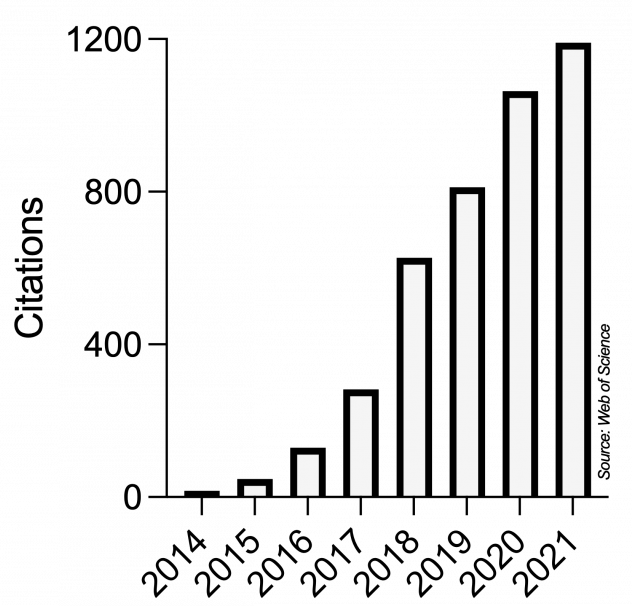
Ever since, Microbial Cell has very positively developed and strongly grown into a respected journal in the unicellular research community and even beyond. This scientific impact is reflected in the yearly number of citations obtained by articles published in Microbial Cell, as recorded by the Web of Science (Clarivate, formerly Thomson/Reuters):
The scientific impact of Microbial Cell is also mirrored in a series of milestones:
2015: Microbial Cell is included in the Emerging Sources Citation Index (ESCI), a selection of developing journals drafted by Clarivate Analytics based on the candidate’s publishing standards, quality, editorial content, and citation data. Note: As an ESCI-selected journal, Microbial Cell is currently being evaluated in a rigorous and long process to determine an inclusion in the Science Citation Index Expanded (SCIE), which allows the official calculation of Clarivate Analytics’ impact factor.

2016: Microbial Cell is awarded the so-called DOAJ Seal by the selective Directory of Open Access Journals (DOAJ). The DOAJ Seal is an exclusive mark of certification for open access journals granted by DOAJ to journals that adhere to outstanding best practice and achieve an extra high and clear commitment to open access and high publishing standards.

2017: Microbial Cell is included in Pubmed Central (PMC), allowing the archiving of all the journal’s articles in PMC and PubMed.

2019: Microbial Cell is indexed in the prestigious abstract and citation database Scopus after a thorough selection process. This also means that Microbial Cell obtains, for the first time, an official Scopus CiteScore as well as an official journal ranking in the Scimago Journal and Country Ranking.

2022: Microbial Cell’s CiteScore reaches a value of 7.2 for the year 2021, positioning Microbial Cell among the top microbiology journals (previously available CiteScores: 2019: 5.4; 2020: 5.1).

2022: Microbial Cell is indexed in the highly selective Science Citation Index Expanded™, which covers approx. 9,500 of the world’s most impactful journals across 178 scientific disciplines. In their journal selection and curation process, Clarivate´s editors apply 24 ‘quality’ criteria and four ‘impact’ criteria to select the most influential journals in their respective fields. This selection is also a pre-requisite for inclusion in the JCR, which features the impact factor.

2022: Microbial Cell is listed in the Journal Citation Reports™ (JCR), and obtains its first official Journal Impact Factor™ (JIF) for the year 2021: 5.316.Check Article Types and Manuscript Preparation guidelines. Submit online via Scholastica.