
Volume 2 (2018)
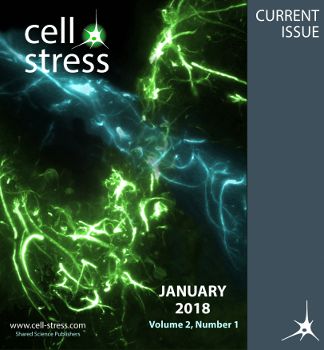
Cover: This month in Cell Stress: Kinase signaling in the innate immune system. Fluorescence microscopic depiction of immune cell responses within the CNS upon chronic pain. Images by Centre for Nanoscale BioPhotonics (CNBP) licensed under the CC BY 2.0 license. Image modified by Cell Stress. The cover is published under the CC BY 4.0 license.
Oxidation of p62 as an evolutionary adaptation to promote autophagy in stress conditions
Elsje G. Otten1,§, Rhoda Stefanatos1, Bernadette Carroll1, Viktor I. Korolchuk1
Autophagy (literally meaning self-eating) is an intracellular trafficking pathway. It involves the formation of a double membraned organelle (called the autophagosome) around components of the cell, such as damaged proteins,
How to use a multipurpose SNARE: The emerging role of Snap29 in cellular health
Valeria Mastrodonato1,#, Elena Morelli1,# and Thomas Vaccari1
[table id=90 /] INTRODUCTION The specialized trafficking routes that evolved between compartments of the endomembrane system rely on a wide set of proteins, including primarily SNAREs, Rab GTPases and a
Assay for high-throughput screening of inhibitors of the ASC-PYD inflammasome core filament
Lorenzo Sborgi1, Johanna Ude1, Mathias S. Dick1, Jonathan Vesin2, Marc Chambon2, Gerardo Turcatti2, Petr Broz1, Sebastian Hiller1
The protein ASC is a central component of most inflammasome complexes, forming functional oligomeric filaments that activate large amounts of pro-caspase-1 for further IL-1β processing and the induction of Gasdermin D-dependent cell death. The central role of inflammasomes in the innate immune response pose them as new molecular targets for therapy of diverse acute, chronic and inherited autoinflammatory pathologies. In recent years, an increasing number of molecules were proposed to modulate inflammasome signalling by interacting with different components of inflammasome complexes. However, the difficult in vitro reconstitution of the inflammasome has limited the development of specific on-target biochemical assays for compound activity confirmation and for drug discovery in high throughput screening setups. Here we describe a homogeneous, pH (...)
Dram1 regulates DNA damage-induced alternative autophagy
Meruna Nagata1, Satoko Arakawa1, Hirofumi Yamaguchi1, Satoru Torii1, Hazuki Endo1, Masatsune Tsujioka1, Shinya Honda1, Yuya Nishida1, Akimitsu Konishi1,2, Shigeomi Shimizu1
Autophagy is an evolutionarily conserved process that degrades subcellular constituents. Mammalian cells undergo two types of autophagy; Atg5-dependent conventional autophagy and Atg5-independent alternative autophagy, and the molecules required for the latter type of autophagy are largely unknown. In this study, we analyzed the molecular mechanisms of genotoxic stress-induced alternative autophagy, and identified the essential role of p53 and damage-regulated autophagy modulator (Dram1). Dram1 was sufficient to induce alternative autophagy. In the mechanism of alternative autophagy, Dram1 functions in the closure of isolation membranes downstream of p53. These findings indicate that Dram1 plays a pivotal role in genotoxic stress-induced alternative autophagy.
Therapeutic potential of DNA methyltransferase inhibitors with immune checkpoint inhibitor therapy in breast cancer
Na Luo1, Ayaka Sugiura2 and Justin M. Balko1,3,4,5
Tumor infiltrating lymphocytes (TILs) are a positive prognostic biomarker in breast cancer, particularly in hormone receptor-negative disease. High TILs associate with an improved survival rate in breast cancer patients, and
The emerging role of minor intron splicing in neurological disorders
Daniel Jutzi 1,2,+, Maureen V. Akinyi 3,+, Jonas Mechtersheimer1,2,+, Mikko J. Frilander3 and Marc-David Ruepp1,4
INTRODUCTION Pre-mRNA splicing is an essential step in eukaryotic gene expression. It is predominantly a co-transcriptional process during which the non-coding introns are excised from precursor mRNA (pre-mRNA) molecules and
A new way to regulate inflammation: selective autophagic degradation of IKKγ mediated by ANGPTL8
Yu Zhang1, Ling Zheng2 and Kun Huang1
Activation of transcription factor nuclear factor-κB (NF-κB) is one of the central events in inflammation and immunity. In resting cells, the activity of NF-κB is inhibited by its binding partner,
Rejuvenation of the aged neuromuscular junction by exercise
Tabita Kreko-Pierce1,2 and Benjamin A. Eaton1,2
Age-dependent declines in muscle function are observed across species. The loss of mobility resulting from the decline in muscle function represents an important health issue and a key determinant of quality of life for the elderly. It is believed that changes in the structure and function of the neuromuscular junction are important contributors to the observed declines in motor function with increased age. Numerous studies indicate that the aging muscle is an important contributor to the deterioration of the neuromuscular junction but the cellular and molecular mechanisms driving the degeneration of the synapse remain incompletely described. Importantly, growing data from both animal models and humans indicate that exercise can rejuvenate the neuromuscular junction and improve motor function. In this review we will focus on the role of muscle-derived neurotrophin signaling in the rejuvenation of the aged neuromuscular junction in response to exercise.
Full antagonist of the IL-7 receptor suppresses chronic inflammation in non-human primate models by controlling antigen-specific memory T cells
Lyssia Belarif1, Bernard Vanhove1 and Nicolas Poirier1
Targeting proinflammatory cytokines such as TNFα, IL-1, IL-6, is clinically beneficial in several immune-mediated inflammatory diseases (IMID). However, these cytokines are downstream mediators of immune responses that show poor impact
TRIM16 employs NRF2, ubiquitin system and aggrephagy for safe disposal of stress-induced misfolded proteins
Kautilya Kumar Jena1,2, Subhash Mehto1, Srinivasa Prasad Kolapalli1, Parej Nath1, Swati Chauhan1 and Santosh Chauhan1
We found that under oxidative or proteotoxic stress conditions, the TRIM16 is required for biogenesis of protein aggregates from misfolded proteins. In our attempt to investigate the mechanism by which
Systemic signalling and local effectors in developmental stability, body symmetry, and size
Sergio Juarez-Carreño1, Javier Morante1 and Maria Dominguez1
Symmetric growth and the origins of fluctuating asymmetry are unresolved phenomena of biology. Small, and sometimes noticeable, deviations from perfect bilateral symmetry reflect the vulnerability of development to perturbations. The degree of asymmetry is related to the magnitude of the perturbations and the ability of an individual to cope with them. As the left and right sides of an individual were presumed to be genetically identical, deviations of symmetry were traditionally attributed to non-genetic effects such as environmental and developmental noise. In this review, we draw attention to other possible sources of variability, especially to somatic mutations and transposons. Mutations are a major source of phenotypic variability and recent genomic data have highlighted somatic mutations as ubiquitous, even in phenotypically normal individuals. We discuss the importance of factors that are responsible for buffering and stabilizing the genome (...)
Making the final cut: pathogenic amyloid-β peptide generation by γ-secretase
Harald Steiner1,2, Akio Fukumori3, Shinji Tagami4 and Masayasu Okochi4
Alzheimer´s disease (AD) is a devastating neurodegenerative disease of the elderly population. Genetic evidence strongly suggests that aberrant generation and/or clearance of the neurotoxic amyloid-β peptide (Aβ) is triggering the disease. Aβ is generated from the amyloid precursor protein (APP) by the sequential cleavages of β- and γ-secretase. The latter cleavage by γ-secretase, a unique and fascinating four-component protease complex, occurs in the APP transmembrane domain thereby releasing Aβ species of 37-43 amino acids in length including the longer, highly pathogenic peptides Aβ42 and Aβ43. The lack of a precise understanding of Aβ generation as well as of the functions of other γ-secretase substrates has been one factor underlying the disappointing failure of γ-secretase inhibitors in clinical trials, but on the other side also been a major driving force for structural and in depth mechanistic studies on this key AD drug target in the past few years. Here we (...)
Mechanisms and therapeutic significance of autophagy modulation by antipsychotic drugs
Ljubica Vucicevic1, Maja Misirkic-Marjanovic1, Ljubica Harhaji-Trajkovic1, Nadja Maric2 and Vladimir Trajkovic3
INTRODUCTION The term autophagy (‘self-eating’ in Greek) refers to a group of evolutionarily conserved homeostatic mechanisms employed by eukaryotic cells to eliminate aged, unused, and damaged cytoplasmic components through lysosomal
Amelioration of obesity-induced diabetes by a novel autophagy enhancer
Hyejin Lim1 and Myung-Shik Lee1
Our screening system was a convenient high throughput assay of autophagic flux rather than cumulative autophagy levels, and the index of autophagic activity was calculated as the ratio of the
Striatal dual cholinergic /GABAergic transmission in Parkinson disease: friends or foes?
Natalia Lozovaya1, Yehezkel Ben-Ari1 and Constance Hammond1
Although constituting less than 1% of neuronal population of the striatum, cholinergic interneurons play a major role in the control of sensory integration in preparation for movements. These giant neurons
The NLRC4 inflammasome requires IRF8-dependent production of NAIPs
Ein Lee1,2, Rajendra Karki1 and Thirumala-Devi Kanneganti1
Inflammasomes orchestrate cellular responses to pathogen- or danger-associated molecular patterns by controlling the activation of caspase-1. Inflammasome activation results in enzymatically active caspase-1, which mediates the maturation and release of
Targeting LRH-1/NR5A2 to treat type 1 diabetes mellitus
Nadia Cobo-Vuilleumier1, Petra I. Lorenzo1 and Benoit R. Gauthier1
The liver receptor homolog-1 (LRH-1) is a member of the NR5A family of nuclear receptors that plays a pivotal role in early embryonic development while later on it specifies the
Nucleolar Stress: hallmarks, sensing mechanism and diseases
Kai Yang1,2, Jie Yang1 and Jing Yi1
The nucleolus is a prominent subnuclear compartment, where ribosome biosynthesis takes place. Recently, the nucleolus has gained attention for its novel role in the regulation of cellular stress. Nucleolar stress is emerging as a new concept, which is characterized by diverse cellular insult-induced abnormalities in nucleolar structure and function, ultimately leading to activation of p53 or other stress signaling pathways and alterations in cell behavior. Despite a number of comprehensive reviews on this concept, straightforward and clear-cut way criteria for a nucleolar stress state, regarding the factors that elicit this state, the morphological and functional alterations as well as the rationale for p53 activation are still missing. Based on literature of the past two decades, we herein summarize the evolution of the concept and provide hallmarks of nucleolar stress. Along with updated information and thorough discussion of existing confusions in the field, we pay particular attention to the current understanding of the sensing mechanisms (...)
Calling RNF168 to action
Somaira Nowsheen1 and Zhenkun Lou2
– [table id=103 /] – It is interesting to note that MDC1 acts as a node for the recruitment of both RNF8 and L3MBTL2 and brings these two factors into
Exosomal secretion of truncated cytosolic lysyl-tRNA synthetase induces inflammation during cell starvation
Sang Bum Kim1,2, Seongmin Cho1, 2 and Sunghoon Kim1,2
Kim et al. (2017) reveals three crucial steps of KRS secretion, including its dissociation from the MSC complex, interaction with syntenin, and secretion via the exosomal pathway (Figure 1). –
Base editors: a powerful tool for generating animal models of human diseases
Zongyang Lu1,2 and Xingxu Huang1,3
BASE EDITORS: A NOVEL GENOME ENGINEERING TOOL Genetically engineered mouse models of human diseases have long been used in understanding the underlying mechanisms of the clinically relevant genetic disorders. In
Unweaving the role of nuclear Lamins in neural circuit integrity
Samantha L. Deal1 and Shinya Yamamoto1,2,3,4
Structural integrity of the nuclear membrane is essential for the homeostasis of eukaryotic cells. Critical components of this process are Lamins or type-V intermediate filament proteins that form a meshwork
Alzheimer’s disease: amyloid-based pathogenesis and potential therapies
Yixiu Zhou1, Yuhui Sun2, Quan-Hong Ma2 and Yaobo Liu2
INTRODUCTION Alzheimer’s disease (AD) is one of the most prevalent forms of dementia; in 2015, for example, AD affected ~46.8 million people worldwide. It is estimated that this number will
Membrane closure in stress induced-autophagosome formation
Eiji Morita1
Autophagy (macroautophagy) is a bulk degradation system that sequesters cytoplasmic components by generating double-layered isolation membranes and delivering these isolated contents to the lysosomes [cite]10.1146/annurev-cellbio-092910-154005[/cite]. Though this pathway was originally
Centriolar satellites prevent uncontrolled degradation of centrosome proteins: a speculative review
Nicolas Lecland1 and Andreas Merdes1
INTRODUCTION Centrosomes are cytoplasmic structures that serve as primary microtubule organizing centers in a large variety of animal cells. They consist of a pair of cylindrically shaped centrioles, surrounded by
Novel role of the SIRT4-OPA1 axis in mitochondrial quality control
Alexander Lang1 and Roland P. Piekorz1
Aging is defined by various molecular and cellular hallmarks, among them stem cell exhaustion, genomic instability, altered proteostasis, cellular senescence, and mitochondrial dysfunction [cite]10.1016/j.cell.2013.05.039[/cite]. Mitochondrial defects are considered major drivers