
Volume 1 (2017)
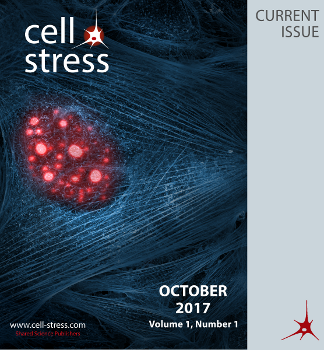
Cover: Picture adapted from Howard Vindin. Modified by CST. Licensed under the CC BY-SA 4.0 license.
A game of substrates: replication fork remodeling and its roles in genome stability and chemo-resistance
Julia Sidorova1
During the hours that human cells spend in the DNA synthesis (S) phase of the cell cycle, they may encounter adversities such as DNA damage or shortage of nucleotides. Under these stresses, replication forks in DNA may experience slowing, stalling, and breakage. Fork remodeling mechanisms, which stabilize slow or stalled replication forks and ensure their ability to continue or resume replication, protect cells from genomic instability and carcinogenesis. Fork remodeling includes DNA strand exchanges that result in annealing of newly synthesized strands (fork reversal), controlled DNA resection, and cleavage of DNA strands. Defects in major tumor suppressor genes BRCA1 and BRCA2, and a subset of the Fanconi Anemia genes have been shown to result in deregulation in fork remodeling, and most prominently, loss of kilobases of nascent DNA from stalled replication forks. This phenomenon has recently gained spotlight as a potential marker and mediator of (...)
New insight into the role of autophagy in tumorigenesis
Yongjun Tian1, Linya Wang2 and Jing-hsiung James Ou2
TP53, commonly known as p53, is an important tumor suppressor. Its increased expression was observed not only in the liver tumors of our Atg5-knockout mice but also in the lung
Protein quality control meets transcriptome remodeling under stress
Veena Mathew1 and Peter C. Stirling1
Protein quality control (PQC) is an essential part of cellular homeostasis and encompasses the balance of non-native protein folding and degradation. Under stress, triage of non-native or disassembled proteins to
Exploding the necroptotic bubble
Liat Edry-Botzer1 and Motti Gerlic1
Several new types of regulated cell death have emerged from analysis of necrotic forms of cell death; one example is necroptosis, a RIPK3-MLKL-dependent and caspase-independent form of cell death. Although
The role of hydrophobic matching on transmembrane helix packing in cells
Brayan Grau1, Matti Javanainen2,3, Maria Jesús García-Murria1, Waldemar Kulig2,3, Ilpo Vattulainen2,3,4, Ismael Mingarro1, Luis Martínez-Gil1
INTRODUCTION Assembly of the native structure of most integral membrane proteins takes place in two main steps [cite source=’pubmed’]1694455[/cite]. The first step includes targeting and insertion of the protein into
Tumor suppressive Ca2+ signaling is driven by IP3 receptor fitness
Geert Bultynck1 and Michelangelo Campanella2,3
Intracellular Ca2+ signals critically control a plethora of cellular functions, of which many impact cellular death and/or survival, processes often dysregulated in cancer [cite]10.1038/nrc.2017.18[/cite]. In healthy cells, Ca2+ signaling is
Emerging roles of mitochondria and autophagy in liver injury during sepsis
Toshihiko Aki1,*, Kana Unuma1 and Koichi Uemura1
Recent research indicates crucial roles of autophagy during sepsis. In animal models of sepsis induced by cecal ligation and puncture (CLP) or the systemic administration of lipopolysaccharides (LPS), autophagy is implicated in the activation and/or damage of various cells/organs, such as immune cells, heart, lung, kidney, and liver. Since sepsis is associated with an increased production of pro- as well as anti-inflammatory cytokines, it has long been considered that hypercytokinemia is a fetal immune response leading to multiple organ failure (MOF) and mortality of humans during sepsis. However, a recent paradigm illuminates the crucial roles of mitochondrial dysfunction as well as the perturbation of autophagy in the pathogenesis of sepsis. In the livers of animal models of sepsis, autophagy is involved in the elimination of damaged mitochondria to prevent the generation of mitochondrial ROS and the initiation of the mitochondrial apoptotic (...)
Fumarase mediates transcriptional response to nutrient stress
Qin Zhao1 and Yuhui Jiang1
To date, emerging evidence demonstrate that metabolites participate in a wide variety of cellular activities besides their direct role in metabolism. Previous studies have reported that metabolic activity of FH
The long non-coding RNA H19 – a new player in hepatocellular carcinoma
Maximilian A. Ardelt1 and Johanna Pachmayr2
Hepatocellular carcinoma (HCC) is among the most prevalent and lethal cancers worldwide [cite]10.3322/caac.20107[/cite]. Incidence is increasing and due to its high chemoresistance, the therapeutic options are limited and HCC has
A game of substrates: replication fork remodeling and its roles in genome stability and chemo-resistance
Julia Sidorova1
During the hours that human cells spend in the DNA synthesis (S) phase of the cell cycle, they may encounter adversities such as DNA damage or shortage of nucleotides. Under these stresses, replication forks in DNA may experience slowing, stalling, and breakage. Fork remodeling mechanisms, which stabilize slow or stalled replication forks and ensure their ability to continue or resume replication, protect cells from genomic instability and carcinogenesis. Fork remodeling includes DNA strand exchanges that result in annealing of newly synthesized strands (fork reversal), controlled DNA resection, and cleavage of DNA strands. Defects in major tumor suppressor genes BRCA1 and BRCA2, and a subset of the Fanconi Anemia genes have been shown to result in deregulation in fork remodeling, and most prominently, loss of kilobases of nascent DNA from stalled replication forks. This phenomenon has recently gained spotlight as a potential marker and mediator of (...)
New insight into the role of autophagy in tumorigenesis
Yongjun Tian1, Linya Wang2 and Jing-hsiung James Ou2
TP53, commonly known as p53, is an important tumor suppressor. Its increased expression was observed not only in the liver tumors of our Atg5-knockout mice but also in the lung
Protein quality control meets transcriptome remodeling under stress
Veena Mathew1 and Peter C. Stirling1
Protein quality control (PQC) is an essential part of cellular homeostasis and encompasses the balance of non-native protein folding and degradation. Under stress, triage of non-native or disassembled proteins to
Exploding the necroptotic bubble
Liat Edry-Botzer1 and Motti Gerlic1
Several new types of regulated cell death have emerged from analysis of necrotic forms of cell death; one example is necroptosis, a RIPK3-MLKL-dependent and caspase-independent form of cell death. Although
Emerging roles of mitochondria and autophagy in liver injury during sepsis
Toshihiko Aki1,*, Kana Unuma1 and Koichi Uemura1
Recent research indicates crucial roles of autophagy during sepsis. In animal models of sepsis induced by cecal ligation and puncture (CLP) or the systemic administration of lipopolysaccharides (LPS), autophagy is implicated in the activation and/or damage of various cells/organs, such as immune cells, heart, lung, kidney, and liver. Since sepsis is associated with an increased production of pro- as well as anti-inflammatory cytokines, it has long been considered that hypercytokinemia is a fetal immune response leading to multiple organ failure (MOF) and mortality of humans during sepsis. However, a recent paradigm illuminates the crucial roles of mitochondrial dysfunction as well as the perturbation of autophagy in the pathogenesis of sepsis. In the livers of animal models of sepsis, autophagy is involved in the elimination of damaged mitochondria to prevent the generation of mitochondrial ROS and the initiation of the mitochondrial apoptotic (...)
Fumarase mediates transcriptional response to nutrient stress
Qin Zhao1 and Yuhui Jiang1
To date, emerging evidence demonstrate that metabolites participate in a wide variety of cellular activities besides their direct role in metabolism. Previous studies have reported that metabolic activity of FH
Senescence explains age- and obesity-related liver steatosis
Mikolaj Ogrodnik1 and Diana Jurk1,*
In a study recently published in the journal Nature Communications we have researched the role of cellular senescence during liver ageing, in obesity and NAFLD. We observed that hepatocyte fat
Tumor suppressive Ca2+ signaling is driven by IP3 receptor fitness
Geert Bultynck1 and Michelangelo Campanella2,3
Intracellular Ca2+ signals critically control a plethora of cellular functions, of which many impact cellular death and/or survival, processes often dysregulated in cancer [cite]10.1038/nrc.2017.18[/cite]. In healthy cells, Ca2+ signaling is
The long non-coding RNA H19 – a new player in hepatocellular carcinoma
Maximilian A. Ardelt1 and Johanna Pachmayr2
Hepatocellular carcinoma (HCC) is among the most prevalent and lethal cancers worldwide [cite]10.3322/caac.20107[/cite]. Incidence is increasing and due to its high chemoresistance, the therapeutic options are limited and HCC has