
Triptolide inhibits ovarian cancer growth and metastasis via reprogramming of tumor-associated macrophages
For full text please see pdf.

Cell Stress
Cell Stress (CES) emerges as a peer-reviewed publishing platform for high-impact research. CES publishes articles of extraordinary novelty and significance, including research papers and reviews that cover heterogenous topics in the field of cellular pathophysiology.
MicroRNA as key players in skin regeneration and anti-aging pathways
Azizi et al.For full text please see pdf.
Stress management by benzodiazepines in septic shock and critical illness: mechanistic and clinical evidence supporting alternative sedative strategies
Lambertucci et al.For full text please see pdf.
Triptolide inhibits ovarian cancer growth and metastasis via reprogramming of tumor-associated macrophages
Chen et al.For full text please see pdf.
The IRE1α-XBP1s-NFκB axis controls cell survival and epithelial differentiation under osmotic stress through arachidonic acid metabolism activation
Parra et al.Arachidonic acid (AA) metabolism plays a critical role in renal cell osmoadaptation. We recently demonstrated that hypertonicity induces the expression and activation of cytosolic phospholipase A2 (cPLA2). On one hand, AA released by cPLA2 enhances triacylglyceride (TG) synthesis and accumulation. On the other hand, AA is converted into prostaglandins (PG) through cyclooxygenase 2 (COX2) activity. Both processes are required for renal cell survival under osmotic stress. However, the mechanisms by which hypertonicity induces cPLA2 expression remain poorly understood. Given that we previously shown that hypertonicity regulates TG synthesis through the IRE1α-XBP1s branch of the unfolded protein (…)
Multifaceted role of CNPY2 beyond ER stress: Disease implications and therapeutic potential
Ebadollahibaruq et al.This review meticulously dissects CNPY2’s structural characteristics, expression patterns, and biological functions across various disorders, emphasizing its role on tumor initiation, microenvironmental stress, and chemoresistance, and evaluating its potential as a therapeutic target.
Antifungal peptides: from modes of action to synergistic and immunologic potential
Carmona-Gutierrez et al.Reversal of Cushing syndrome by antibody-mediated neutralization of ACBP/DBI
Shen et al.For full text please see pdf.
The role of hydrophobic matching on transmembrane helix packing in cells
Grau et al.INTRODUCTION Assembly of the native structure of most integral membrane proteins takes place in two main steps [cite source=’pubmed’]1694455[/cite]. The first step includes targeting and insertion of the protein into a lipid membrane. In the
mIDH-associated DNA hypermethylation in acute myeloid leukemia reflects differentiation blockage rather than inhibition of TET-mediated demethylation
Wiehle et al.INTRODUCTION Isocitrate dehydrogenase enzymes IDH1 and IDH2 are two closely related enzymes that convert isocitrate to α-ketoglutarate in the tricarboxylic acid (TCA) cycle. The genes encoding IDH1 and IDH2 are recurrently mutated in different cancer
The long non-coding RNA H19 suppresses carcinogenesis and chemoresistance in hepatocellular carcinoma
Schultheiss et al.The long non-coding RNA (lncRNA) H19 represents a maternally expressed and epigenetically regulated imprinted gene product and is discussed to have either tumor-promoting or tumor-suppressive actions. Recently, H19 was shown to be regulated under inflammatory conditions. Therefore, aim of this study was to determine the function of H19 in hepatocellular carcinoma (HCC), an inflammation-associated type of tumor. In four different human HCC patient cohorts H19 was distinctly downregulated in tumor tissue compared(…)
To promote or inhibit glioma progression, that is the question for IL-33
Robbins and SengerGlioblastoma represents one of the most fatal of human cancers. Although there has been progress in the treatment of glioblastoma as a result of a treatment regimen that combines maximal surgical resection with radiotherapy and
TLR4: the fall guy in sepsis?
Menassa et al.WHOLE GENOME CRISPR SCREEN AND THE IDENTIFICATION OF Treml4 We reasoned that if immune cells undergo apoptosis during sepsis, ablation of the gene responsible for this in a sub-population should give a survival advantage and
A mutant p53/Hif1α/miR-30d axis reprograms the secretory pathway promoting the release of a prometastatic secretome
Capaci et al.– [table id=357/] MUT-p53 AS A DRIVER OF A MALIGNANT SECRETOME p53 mutants can promote tumorigenesis by affecting fundamental cellular pathways and functions, and by modulating the interplay of cancer cells with the TME. The
Endocytosis in the adaptation to cellular stress
López-Hernández et al.Cellular life is challenged by a multitude of stress conditions, triggered for example by alterations in osmolarity, oxygen or nutrient supply. Hence, cells have developed sophisticated stress responses to cope with these challenges. Some of these stress programs such as the heat shock response are understood in great detail, while other aspects remain largely elusive including potential stress-dependent adaptations of the plasma membrane proteome. The plasma membrane is not only the first point of encounter for many types of environmental stress, but given the diversity of receptor proteins and their associated molecules also represents the site at which many cellular signal cascades originate. Since these signaling pathways affect virtually all aspects of cellular life, changes in the plasma membrane proteome appear ideally suited to contribute to the cellular adaptation to stress. The most rapid means to alter the cell surface proteome in response to stress is by alterations in endocytosis. Changes in the overall endocytic flux or in the endocytic (…)
Exocytotic fusion pore under stress
Chowdhury and ZorecExocytosis is a universal process of eukaryotic cells, consisting of fusion between the vesicle and the plasma membranes, leading to the formation of a fusion pore, a channel through which vesicle cargo exits into the extracellular space. In 1986, Rand and Parsegian proposed several stages to explain the nature of membrane fusion. Following stimulation, it starts with focused stress destabilization of membranes in contact, followed by the coalescence of two membrane surfaces. In the next fraction of a millisecond, restabilization of fused membranes is considered to occur to maintain the cell’s integrity. This view predicted that once a fusion pore is formed, it must widen abruptly, irreversibly and fully, whereby the vesicle membrane completely integrates with and collapses into the plasma membrane (full fusion exocytosis). However, recent experimental evidence has revealed that once the fusion pore opens, it may also reversibly close (transient or kiss-and-run exocytosis). Here, we present a historical perspective on understanding the mechanisms that initiate (…)
Targeting immune-checkpoint inhibitor resistance mechanisms by MEK inhibitor and agonist anti-CD40 antibody combination therapy
Baumann and Offringa– [table id=351/] IDENTIFYING SUITABLE CYTOSTATIC DRUGS FOR COMBINATORIAL IMMUNOTHERAPY The main dilemma in finding combinations of cytostatic and immunostimulatory drugs that act synergistically is as follows. On the one hand, the aim is to
Hyaluronan goes to great length
Gorbunova et al.The naked mole rat is the longest-lived rodent with the maximum lifespan of over 35 years. Naked mole rats are protected from a wide range of age-related diseases including cancer, cardiovascular disease, arthritis and neurodegeneration.
PRMT5 function and targeting in cancer
Kim and RonaiProtein methyl transferases play critical roles in numerous regulatory pathways that underlie cancer development, progression and therapy-response. Here we discuss the function of PRMT5, a member of the nine-member PRMT family, in controlling oncogenic processes including tumor intrinsic, as well as extrinsic microenvironmental signaling pathways. We discuss PRMT5 effect on histone methylation and methylation of regulatory proteins including those involved in RNA splicing, cell cycle, cell death and metabolic signaling. In all, we highlight the importance of PRMT5 regulation and function in cancer, which provide the foundation for therapeutic modalities targeting PRMT5.
HIF1α or mitophagy: which drives cardiomyocyte differentiation?
Villarejo-Zori et al.Cardiomyocytes (CMs) are the main cellular component of the heart's atria and ventricles, and their contractile capacity is the engine that drives blood flow throughout the body. The differentiation of cardiac myoblasts into CMs during
Copper – a novel stimulator of autophagy
Zischka and KroemerIn biomedicine, the transition metal copper has a Janus-faced dual role, as an essential but static cofactor of vital enzymes but also as a highly detrimental poison, if in excess. This vision is best exemplified
Coronavirus infections: Epidemiological, clinical and immunological features and hypotheses
INTRODUCTION Infections have been limiting quality of life and longevity throughout human history. Endemic infections have been associated to a significant number of avoidable deaths and a significant increase of morbidity all around the word.
ACBP is an appetite stimulator across phylogenetic barriers
Madeo et al.Human civilization is unique with respect to the organization of our natural environment, allowing constant supply of nutrients to most individuals in developed countries, contrasting with the natural fluctuation in food sources found in wildlife.
LTX-315 – a promising novel antitumor peptide and immunotherapeutic agent
ZweytickHost defense in mammals, as provided by the innate immune system, comprises proteins such as lactoferrin (LF), a multifunctional iron-binding glycoprotein originally discovered in bovine milk. LF is further pepsin-cleaved to a cationic amphipathic peptide,
Anti-regulatory T cells are natural regulatory effector T cells
ØdumIt is well established that the immune system uses regulatory immune-suppressive cells to inhibit and terminate immune reactions and maintain immune balance. In the last decade, Andersen and colleagues have discovered that regulatory cells also
The targeting of tumor-associated macrophages by vaccination
AndersenImmune suppressive myeloid cells include a heterogenous population of cells that include tumor-associated macrophages (TAMs). TAMs are major players in inducing the immunosuppressive microenvironment associated with many tumors. These lesions were recently defined as tumors
Mitochondrial stress delays tumorigenesis in a Li-Fraumeni syndrome mouse model
Donnelly et al.As a prominent hub of metabolic activity, the mitochondrion can initiate retrograde signaling in response to bioenergetic stress that is important for various adaptive changes including cell cycle regulation [1][2]. There is abundant evidence that
Can’t find what you’re looking for?
You can browse all our issues and published articles here.
FAQs
Peer-reviewed, open-access research using unicellular organisms (and multicellular microorganisms) to understand cellular responses and human disease.
The journal (founded in 2014) is led by its Editors-in-Chief Frank Madeo, Didac Carmona-Gutierrez, and Guido Kroemer
Microbial Cell has been publishing original scientific literature since 2014, and from the very beginning has been managed by active scientists through an independent Publishing House (Shared science Publishers). The journal was conceived as a platform to acknowledge the importance of unicellular organisms, both as model systems as well as in the biological context of human health and disease.
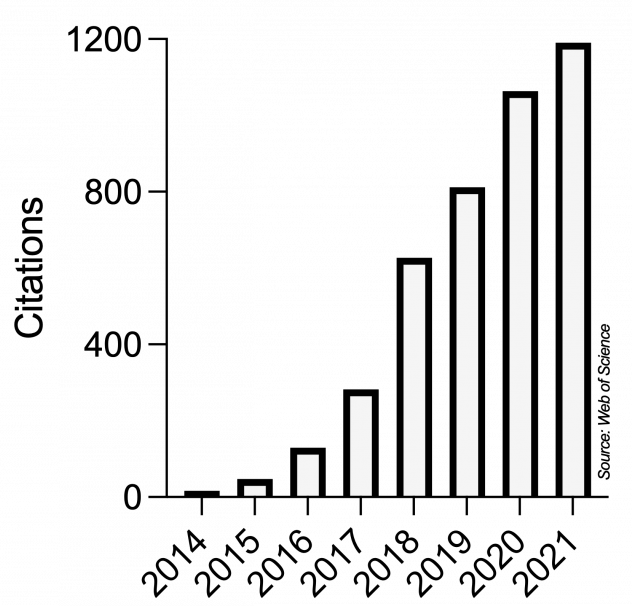
Ever since, Microbial Cell has very positively developed and strongly grown into a respected journal in the unicellular research community and even beyond. This scientific impact is reflected in the yearly number of citations obtained by articles published in Microbial Cell, as recorded by the Web of Science (Clarivate, formerly Thomson/Reuters):
The scientific impact of Microbial Cell is also mirrored in a series of milestones:
2015: Microbial Cell is included in the Emerging Sources Citation Index (ESCI), a selection of developing journals drafted by Clarivate Analytics based on the candidate’s publishing standards, quality, editorial content, and citation data. Note: As an ESCI-selected journal, Microbial Cell is currently being evaluated in a rigorous and long process to determine an inclusion in the Science Citation Index Expanded (SCIE), which allows the official calculation of Clarivate Analytics’ impact factor.

2016: Microbial Cell is awarded the so-called DOAJ Seal by the selective Directory of Open Access Journals (DOAJ). The DOAJ Seal is an exclusive mark of certification for open access journals granted by DOAJ to journals that adhere to outstanding best practice and achieve an extra high and clear commitment to open access and high publishing standards.

2017: Microbial Cell is included in Pubmed Central (PMC), allowing the archiving of all the journal’s articles in PMC and PubMed.

2019: Microbial Cell is indexed in the prestigious abstract and citation database Scopus after a thorough selection process. This also means that Microbial Cell obtains, for the first time, an official Scopus CiteScore as well as an official journal ranking in the Scimago Journal and Country Ranking.

2022: Microbial Cell’s CiteScore reaches a value of 7.2 for the year 2021, positioning Microbial Cell among the top microbiology journals (previously available CiteScores: 2019: 5.4; 2020: 5.1).

2022: Microbial Cell is indexed in the highly selective Science Citation Index Expanded™, which covers approx. 9,500 of the world’s most impactful journals across 178 scientific disciplines. In their journal selection and curation process, Clarivate´s editors apply 24 ‘quality’ criteria and four ‘impact’ criteria to select the most influential journals in their respective fields. This selection is also a pre-requisite for inclusion in the JCR, which features the impact factor.

2022: Microbial Cell is listed in the Journal Citation Reports™ (JCR), and obtains its first official Journal Impact Factor™ (JIF) for the year 2021: 5.316.Check Article Types and Manuscript Preparation guidelines. Submit online via Scholastica.