
Triptolide inhibits ovarian cancer growth and metastasis via reprogramming of tumor-associated macrophages
For full text please see pdf.

Cell Stress
Cell Stress (CES) emerges as a peer-reviewed publishing platform for high-impact research. CES publishes articles of extraordinary novelty and significance, including research papers and reviews that cover heterogenous topics in the field of cellular pathophysiology.
MicroRNA as key players in skin regeneration and anti-aging pathways
Azizi et al.For full text please see pdf.
Stress management by benzodiazepines in septic shock and critical illness: mechanistic and clinical evidence supporting alternative sedative strategies
Lambertucci et al.For full text please see pdf.
Triptolide inhibits ovarian cancer growth and metastasis via reprogramming of tumor-associated macrophages
Chen et al.For full text please see pdf.
The IRE1α-XBP1s-NFκB axis controls cell survival and epithelial differentiation under osmotic stress through arachidonic acid metabolism activation
Parra et al.Arachidonic acid (AA) metabolism plays a critical role in renal cell osmoadaptation. We recently demonstrated that hypertonicity induces the expression and activation of cytosolic phospholipase A2 (cPLA2). On one hand, AA released by cPLA2 enhances triacylglyceride (TG) synthesis and accumulation. On the other hand, AA is converted into prostaglandins (PG) through cyclooxygenase 2 (COX2) activity. Both processes are required for renal cell survival under osmotic stress. However, the mechanisms by which hypertonicity induces cPLA2 expression remain poorly understood. Given that we previously shown that hypertonicity regulates TG synthesis through the IRE1α-XBP1s branch of the unfolded protein (…)
Multifaceted role of CNPY2 beyond ER stress: Disease implications and therapeutic potential
Ebadollahibaruq et al.This review meticulously dissects CNPY2’s structural characteristics, expression patterns, and biological functions across various disorders, emphasizing its role on tumor initiation, microenvironmental stress, and chemoresistance, and evaluating its potential as a therapeutic target.
Antifungal peptides: from modes of action to synergistic and immunologic potential
Carmona-Gutierrez et al.Reversal of Cushing syndrome by antibody-mediated neutralization of ACBP/DBI
Shen et al.For full text please see pdf.
Triptolide inhibits ovarian cancer growth and metastasis via reprogramming of tumor-associated macrophages
Chen et al.For full text please see pdf.
The IRE1α-XBP1s-NFκB axis controls cell survival and epithelial differentiation under osmotic stress through arachidonic acid metabolism activation
Parra et al.Arachidonic acid (AA) metabolism plays a critical role in renal cell osmoadaptation. We recently demonstrated that hypertonicity induces the expression and activation of cytosolic phospholipase A2 (cPLA2). On one hand, AA released by cPLA2 enhances triacylglyceride (TG) synthesis and accumulation. On the other hand, AA is converted into prostaglandins (PG) through cyclooxygenase 2 (COX2) activity. Both processes are required for renal cell survival under osmotic stress. However, the mechanisms by which hypertonicity induces cPLA2 expression remain poorly understood. Given that we previously shown that hypertonicity regulates TG synthesis through the IRE1α-XBP1s branch of the unfolded protein (…)
Reversal of Cushing syndrome by antibody-mediated neutralization of ACBP/DBI
Shen et al.For full text please see pdf.
Quantifying replication stress in cancer without proliferation confounding
Jungk and KschischoThe authors developed a refined gene expression signature (TRSS) that accurately measures replication stress independently of cell proliferation, addressing a major limitation of existing biomarkers that conflate stress with oncogene-driven growth. Applying this signature to patient samples, they discovered that replication stress is associated with activation of the non-homologous end-joining DNA repair pathway, suggesting cells may shift toward this repair mechanism under replication stress conditions.
Datopotamab deruxtecan induces hallmarks of immunogenic cell death
Forveille et al.For full text see pdf.
Oxidative stress induces cortical stiffening and cytoskeletal remodelling in pre-apoptotic cancer cells
Jalmukhambetova et al.For full text see pdf.
Bax- Bcl-xL interaction dynamics during the progression of cell cycle and cell death using FLIM-FRET
Halikar et al.For full text please see pdf.
How to use a multipurpose SNARE: The emerging role of Snap29 in cellular health
Mastrodonato et al.[table id=90 /] INTRODUCTION The specialized trafficking routes that evolved between compartments of the endomembrane system rely on a wide set of proteins, including primarily SNAREs, Rab GTPases and a large set of effectors and
Therapeutic potential of DNA methyltransferase inhibitors with immune checkpoint inhibitor therapy in breast cancer
Luo et al.Tumor infiltrating lymphocytes (TILs) are a positive prognostic biomarker in breast cancer, particularly in hormone receptor-negative disease. High TILs associate with an improved survival rate in breast cancer patients, and it is these patients who
The emerging role of minor intron splicing in neurological disorders
Jutzi et al.INTRODUCTION Pre-mRNA splicing is an essential step in eukaryotic gene expression. It is predominantly a co-transcriptional process during which the non-coding introns are excised from precursor mRNA (pre-mRNA) molecules and the flanking exons are joined
A new way to regulate inflammation: selective autophagic degradation of IKKγ mediated by ANGPTL8
Zhang et al.Activation of transcription factor nuclear factor-κB (NF-κB) is one of the central events in inflammation and immunity. In resting cells, the activity of NF-κB is inhibited by its binding partner, inhibitor of κB α (IκBα).
Rejuvenation of the aged neuromuscular junction by exercise
Kreko-Pierce and EatonAge-dependent declines in muscle function are observed across species. The loss of mobility resulting from the decline in muscle function represents an important health issue and a key determinant of quality of life for the elderly. It is believed that changes in the structure and function of the neuromuscular junction are important contributors to the observed declines in motor function with increased age. Numerous studies indicate that the aging muscle is an important contributor to the deterioration of the neuromuscular junction but the cellular and molecular mechanisms driving the degeneration of the synapse remain incompletely described. Importantly, growing data from both animal models and humans indicate that exercise can rejuvenate the neuromuscular junction and improve motor function. In this review we will focus on the role of muscle-derived neurotrophin signaling in the rejuvenation of the aged neuromuscular junction in response to exercise.
Salmonella Typhimurium infection: Type I Interferons integrate cellular networks to disintegrate macrophages
RobinsonSalmonella enterica serovar Typhimurium (S. Typhimurium) are facultative intracellular bacteria that effectively evade innate immune defense mechanisms using a plethora of pathogenic principles encoded in their pathogenicity islands namely Salmonella Pathogenicity islands. Systemic infection of
miR34a: a master regulator in the pathogenesis of bronchopulmonary dysplasia
Das et al.BPD has been getting more attention as neonatologists from across the world are getting better in saving the lives of premature neonates. This has mobilized intense research to fill the knowledge gaps in all aspects
Therapeutic potential of HDAC6 in amyotrophic lateral sclerosis
Guo and Van Den BoschAmyotrophic lateral sclerosis (ALS) is a neurodegenerative disorder characterized by the selective death of motor neurons in the motor cortex, brainstem and spinal cord. This leads to progressive muscle weakness, paralysis and ultimately the death
Tumor suppressive Ca2+ signaling is driven by IP3 receptor fitness
Bultynck and CampanellaIntracellular Ca2+ signals critically control a plethora of cellular functions, of which many impact cellular death and/or survival, processes often dysregulated in cancer [cite]10.1038/nrc.2017.18[/cite]. In healthy cells, Ca2+ signaling is employed for normal cell physiology
The long non-coding RNA H19 – a new player in hepatocellular carcinoma
Ardelt and PachmayrHepatocellular carcinoma (HCC) is among the most prevalent and lethal cancers worldwide [cite]10.3322/caac.20107[/cite]. Incidence is increasing and due to its high chemoresistance, the therapeutic options are limited and HCC has risen to become one of
Can’t find what you’re looking for?
You can browse all our issues and published articles here.
FAQs
Peer-reviewed, open-access research using unicellular organisms (and multicellular microorganisms) to understand cellular responses and human disease.
The journal (founded in 2014) is led by its Editors-in-Chief Frank Madeo, Didac Carmona-Gutierrez, and Guido Kroemer
Microbial Cell has been publishing original scientific literature since 2014, and from the very beginning has been managed by active scientists through an independent Publishing House (Shared science Publishers). The journal was conceived as a platform to acknowledge the importance of unicellular organisms, both as model systems as well as in the biological context of human health and disease.
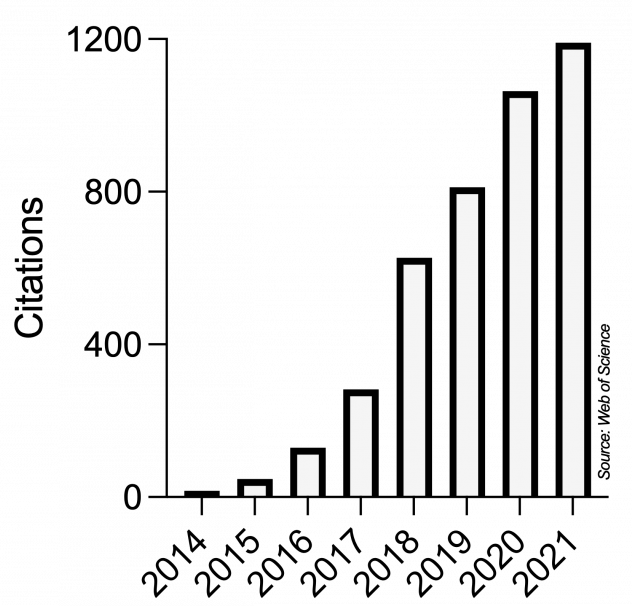
Ever since, Microbial Cell has very positively developed and strongly grown into a respected journal in the unicellular research community and even beyond. This scientific impact is reflected in the yearly number of citations obtained by articles published in Microbial Cell, as recorded by the Web of Science (Clarivate, formerly Thomson/Reuters):
The scientific impact of Microbial Cell is also mirrored in a series of milestones:
2015: Microbial Cell is included in the Emerging Sources Citation Index (ESCI), a selection of developing journals drafted by Clarivate Analytics based on the candidate’s publishing standards, quality, editorial content, and citation data. Note: As an ESCI-selected journal, Microbial Cell is currently being evaluated in a rigorous and long process to determine an inclusion in the Science Citation Index Expanded (SCIE), which allows the official calculation of Clarivate Analytics’ impact factor.

2016: Microbial Cell is awarded the so-called DOAJ Seal by the selective Directory of Open Access Journals (DOAJ). The DOAJ Seal is an exclusive mark of certification for open access journals granted by DOAJ to journals that adhere to outstanding best practice and achieve an extra high and clear commitment to open access and high publishing standards.

2017: Microbial Cell is included in Pubmed Central (PMC), allowing the archiving of all the journal’s articles in PMC and PubMed.

2019: Microbial Cell is indexed in the prestigious abstract and citation database Scopus after a thorough selection process. This also means that Microbial Cell obtains, for the first time, an official Scopus CiteScore as well as an official journal ranking in the Scimago Journal and Country Ranking.

2022: Microbial Cell’s CiteScore reaches a value of 7.2 for the year 2021, positioning Microbial Cell among the top microbiology journals (previously available CiteScores: 2019: 5.4; 2020: 5.1).

2022: Microbial Cell is indexed in the highly selective Science Citation Index Expanded™, which covers approx. 9,500 of the world’s most impactful journals across 178 scientific disciplines. In their journal selection and curation process, Clarivate´s editors apply 24 ‘quality’ criteria and four ‘impact’ criteria to select the most influential journals in their respective fields. This selection is also a pre-requisite for inclusion in the JCR, which features the impact factor.

2022: Microbial Cell is listed in the Journal Citation Reports™ (JCR), and obtains its first official Journal Impact Factor™ (JIF) for the year 2021: 5.316.Check Article Types and Manuscript Preparation guidelines. Submit online via Scholastica.