
Triptolide inhibits ovarian cancer growth and metastasis via reprogramming of tumor-associated macrophages
For full text please see pdf.

Cell Stress
Cell Stress (CES) emerges as a peer-reviewed publishing platform for high-impact research. CES publishes articles of extraordinary novelty and significance, including research papers and reviews that cover heterogenous topics in the field of cellular pathophysiology.
MicroRNA as key players in skin regeneration and anti-aging pathways
Azizi et al.For full text please see pdf.
Stress management by benzodiazepines in septic shock and critical illness: mechanistic and clinical evidence supporting alternative sedative strategies
Lambertucci et al.For full text please see pdf.
Triptolide inhibits ovarian cancer growth and metastasis via reprogramming of tumor-associated macrophages
Chen et al.For full text please see pdf.
The IRE1α-XBP1s-NFκB axis controls cell survival and epithelial differentiation under osmotic stress through arachidonic acid metabolism activation
Parra et al.Arachidonic acid (AA) metabolism plays a critical role in renal cell osmoadaptation. We recently demonstrated that hypertonicity induces the expression and activation of cytosolic phospholipase A2 (cPLA2). On one hand, AA released by cPLA2 enhances triacylglyceride (TG) synthesis and accumulation. On the other hand, AA is converted into prostaglandins (PG) through cyclooxygenase 2 (COX2) activity. Both processes are required for renal cell survival under osmotic stress. However, the mechanisms by which hypertonicity induces cPLA2 expression remain poorly understood. Given that we previously shown that hypertonicity regulates TG synthesis through the IRE1α-XBP1s branch of the unfolded protein (…)
Multifaceted role of CNPY2 beyond ER stress: Disease implications and therapeutic potential
Ebadollahibaruq et al.This review meticulously dissects CNPY2’s structural characteristics, expression patterns, and biological functions across various disorders, emphasizing its role on tumor initiation, microenvironmental stress, and chemoresistance, and evaluating its potential as a therapeutic target.
Antifungal peptides: from modes of action to synergistic and immunologic potential
Carmona-Gutierrez et al.Reversal of Cushing syndrome by antibody-mediated neutralization of ACBP/DBI
Shen et al.For full text please see pdf.
Triptolide inhibits ovarian cancer growth and metastasis via reprogramming of tumor-associated macrophages
Chen et al.For full text please see pdf.
The IRE1α-XBP1s-NFκB axis controls cell survival and epithelial differentiation under osmotic stress through arachidonic acid metabolism activation
Parra et al.Arachidonic acid (AA) metabolism plays a critical role in renal cell osmoadaptation. We recently demonstrated that hypertonicity induces the expression and activation of cytosolic phospholipase A2 (cPLA2). On one hand, AA released by cPLA2 enhances triacylglyceride (TG) synthesis and accumulation. On the other hand, AA is converted into prostaglandins (PG) through cyclooxygenase 2 (COX2) activity. Both processes are required for renal cell survival under osmotic stress. However, the mechanisms by which hypertonicity induces cPLA2 expression remain poorly understood. Given that we previously shown that hypertonicity regulates TG synthesis through the IRE1α-XBP1s branch of the unfolded protein (…)
Reversal of Cushing syndrome by antibody-mediated neutralization of ACBP/DBI
Shen et al.For full text please see pdf.
Quantifying replication stress in cancer without proliferation confounding
Jungk and KschischoThe authors developed a refined gene expression signature (TRSS) that accurately measures replication stress independently of cell proliferation, addressing a major limitation of existing biomarkers that conflate stress with oncogene-driven growth. Applying this signature to patient samples, they discovered that replication stress is associated with activation of the non-homologous end-joining DNA repair pathway, suggesting cells may shift toward this repair mechanism under replication stress conditions.
Datopotamab deruxtecan induces hallmarks of immunogenic cell death
Forveille et al.For full text see pdf.
Oxidative stress induces cortical stiffening and cytoskeletal remodelling in pre-apoptotic cancer cells
Jalmukhambetova et al.For full text see pdf.
Bax- Bcl-xL interaction dynamics during the progression of cell cycle and cell death using FLIM-FRET
Halikar et al.For full text please see pdf.
The NLRC4 inflammasome requires IRF8-dependent production of NAIPs
Lee et al.Inflammasomes orchestrate cellular responses to pathogen- or danger-associated molecular patterns by controlling the activation of caspase-1. Inflammasome activation results in enzymatically active caspase-1, which mediates the maturation and release of the pro-inflammatory cytokines IL-1β and
Targeting LRH-1/NR5A2 to treat type 1 diabetes mellitus
Cobo-Vuilleumier et al.The liver receptor homolog-1 (LRH-1) is a member of the NR5A family of nuclear receptors that plays a pivotal role in early embryonic development while later on it specifies the endodermal lineage. In adults, LRH-1
Nucleolar Stress: hallmarks, sensing mechanism and diseases
Yang et al.The nucleolus is a prominent subnuclear compartment, where ribosome biosynthesis takes place. Recently, the nucleolus has gained attention for its novel role in the regulation of cellular stress. Nucleolar stress is emerging as a new concept, which is characterized by diverse cellular insult-induced abnormalities in nucleolar structure and function, ultimately leading to activation of p53 or other stress signaling pathways and alterations in cell behavior. Despite a number of comprehensive reviews on this concept, straightforward and clear-cut way criteria for a nucleolar stress state, regarding the factors that elicit this state, the morphological and functional alterations as well as the rationale for p53 activation are still missing. Based on literature of the past two decades, we herein summarize the evolution of the concept and provide hallmarks of nucleolar stress. Along with updated information and thorough discussion of existing confusions in the field, we pay particular attention to the current understanding of the sensing mechanisms (…)
Calling RNF168 to action
Nowsheen and Lou– [table id=103 /] – It is interesting to note that MDC1 acts as a node for the recruitment of both RNF8 and L3MBTL2 and brings these two factors into proximity. As we and others
Exosomal secretion of truncated cytosolic lysyl-tRNA synthetase induces inflammation during cell starvation
Kim et al.Kim et al. (2017) reveals three crucial steps of KRS secretion, including its dissociation from the MSC complex, interaction with syntenin, and secretion via the exosomal pathway (Figure 1). – [table id=102 /] – First,
Endolysosomal dysfunction and exosome secretion: implications for neurodegenerative disorders
Miranda and Di PaoloA master regulator of both endolysosomal function and autophagy is Vps34 and its lipid product phosphatidylinositol-3-phosphate (PI3P) through which the lipid kinase exerts most of its biological actions in eukaryotic cells. A host of PI3P
Putting together and taking apart: assembly and disassembly of the Rad51 nucleoprotein filament in DNA repair and genome stability
Andriuskevicius et al.Homologous recombination is a key mechanism providing both genome stability and genetic diversity in all living organisms. Recombinases play a central role in this pathway: multiple protein subunits of Rad51 or its orthologues bind single-stranded DNA to form a nucleoprotein filament which is essential for initiating recombination events. Multiple factors are involved in the regulation of this step, both positively and negatively. In this review, we discuss Rad51 nucleoprotein assembly and disassembly, how it is regulated and what functional significance it has in genome maintenance.
Oxidation of p62 as an evolutionary adaptation to promote autophagy in stress conditions
Otten et al.Autophagy (literally meaning self-eating) is an intracellular trafficking pathway. It involves the formation of a double membraned organelle (called the autophagosome) around components of the cell, such as damaged proteins, protein aggregates and organelles, designated
Mitochondria organize the cellular proteostatic response and promote cellular senescence
Li et al.Timely disposal and degradation of misfolded proteins and their aggregates is critical for cellular proteostasis and the well-being of a cell. During evolution, cells have acquired a sophisticated system to monitor protein quality and maintain
Could de-stressing the brain be the solution for long-term weight loss?
Seyfried and HankirINTRODUCTION One just needs to take a look at a typical vending machine (often found in hospitals) to appreciate what has happened to our food and drink. The relatively sudden widespread ease of access to
Base editors: a powerful tool for generating animal models of human diseases
Lu and HuangBASE EDITORS: A NOVEL GENOME ENGINEERING TOOL Genetically engineered mouse models of human diseases have long been used in understanding the underlying mechanisms of the clinically relevant genetic disorders. In the past, using gene-targeting technology
Unweaving the role of nuclear Lamins in neural circuit integrity
Deal and YamamotoStructural integrity of the nuclear membrane is essential for the homeostasis of eukaryotic cells. Critical components of this process are Lamins or type-V intermediate filament proteins that form a meshwork on the inner nuclear membrane
Alzheimer’s disease: amyloid-based pathogenesis and potential therapies
Zhou et al.INTRODUCTION Alzheimer’s disease (AD) is one of the most prevalent forms of dementia; in 2015, for example, AD affected ~46.8 million people worldwide. It is estimated that this number will continue to increase and reach
Membrane closure in stress induced-autophagosome formation
MoritaAutophagy (macroautophagy) is a bulk degradation system that sequesters cytoplasmic components by generating double-layered isolation membranes and delivering these isolated contents to the lysosomes [cite]10.1146/annurev-cellbio-092910-154005[/cite]. Though this pathway was originally identified as a system essential
Centriolar satellites prevent uncontrolled degradation of centrosome proteins: a speculative review
Lecland and MerdesINTRODUCTION Centrosomes are cytoplasmic structures that serve as primary microtubule organizing centers in a large variety of animal cells. They consist of a pair of cylindrically shaped centrioles, surrounded by pericentriolar material. Since the 1950s,
Novel role of the SIRT4-OPA1 axis in mitochondrial quality control
Lang and PiekorzAging is defined by various molecular and cellular hallmarks, among them stem cell exhaustion, genomic instability, altered proteostasis, cellular senescence, and mitochondrial dysfunction [cite]10.1016/j.cell.2013.05.039[/cite]. Mitochondrial defects are considered major drivers of cellular aging and are
Can’t find what you’re looking for?
You can browse all our issues and published articles here.
FAQs
Peer-reviewed, open-access research using unicellular organisms (and multicellular microorganisms) to understand cellular responses and human disease.
The journal (founded in 2014) is led by its Editors-in-Chief Frank Madeo, Didac Carmona-Gutierrez, and Guido Kroemer
Microbial Cell has been publishing original scientific literature since 2014, and from the very beginning has been managed by active scientists through an independent Publishing House (Shared science Publishers). The journal was conceived as a platform to acknowledge the importance of unicellular organisms, both as model systems as well as in the biological context of human health and disease.
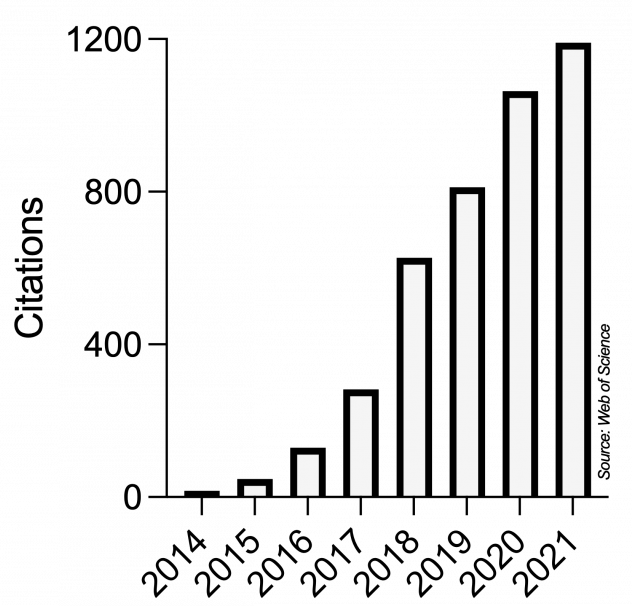
Ever since, Microbial Cell has very positively developed and strongly grown into a respected journal in the unicellular research community and even beyond. This scientific impact is reflected in the yearly number of citations obtained by articles published in Microbial Cell, as recorded by the Web of Science (Clarivate, formerly Thomson/Reuters):
The scientific impact of Microbial Cell is also mirrored in a series of milestones:
2015: Microbial Cell is included in the Emerging Sources Citation Index (ESCI), a selection of developing journals drafted by Clarivate Analytics based on the candidate’s publishing standards, quality, editorial content, and citation data. Note: As an ESCI-selected journal, Microbial Cell is currently being evaluated in a rigorous and long process to determine an inclusion in the Science Citation Index Expanded (SCIE), which allows the official calculation of Clarivate Analytics’ impact factor.

2016: Microbial Cell is awarded the so-called DOAJ Seal by the selective Directory of Open Access Journals (DOAJ). The DOAJ Seal is an exclusive mark of certification for open access journals granted by DOAJ to journals that adhere to outstanding best practice and achieve an extra high and clear commitment to open access and high publishing standards.

2017: Microbial Cell is included in Pubmed Central (PMC), allowing the archiving of all the journal’s articles in PMC and PubMed.

2019: Microbial Cell is indexed in the prestigious abstract and citation database Scopus after a thorough selection process. This also means that Microbial Cell obtains, for the first time, an official Scopus CiteScore as well as an official journal ranking in the Scimago Journal and Country Ranking.

2022: Microbial Cell’s CiteScore reaches a value of 7.2 for the year 2021, positioning Microbial Cell among the top microbiology journals (previously available CiteScores: 2019: 5.4; 2020: 5.1).

2022: Microbial Cell is indexed in the highly selective Science Citation Index Expanded™, which covers approx. 9,500 of the world’s most impactful journals across 178 scientific disciplines. In their journal selection and curation process, Clarivate´s editors apply 24 ‘quality’ criteria and four ‘impact’ criteria to select the most influential journals in their respective fields. This selection is also a pre-requisite for inclusion in the JCR, which features the impact factor.

2022: Microbial Cell is listed in the Journal Citation Reports™ (JCR), and obtains its first official Journal Impact Factor™ (JIF) for the year 2021: 5.316.Check Article Types and Manuscript Preparation guidelines. Submit online via Scholastica.