

Triptolide inhibits ovarian cancer growth and metastasis via reprogramming of tumor-associated macrophages
For full text please see pdf.

Cell Stress
Cell Stress (CES) emerges as a peer-reviewed publishing platform for high-impact research. CES publishes articles of extraordinary novelty and significance, including research papers and reviews that cover heterogenous topics in the field of cellular pathophysiology.
MicroRNA as key players in skin regeneration and anti-aging pathways
Azizi et al.For full text please see pdf.
Stress management by benzodiazepines in septic shock and critical illness: mechanistic and clinical evidence supporting alternative sedative strategies
Lambertucci et al.For full text please see pdf.
Triptolide inhibits ovarian cancer growth and metastasis via reprogramming of tumor-associated macrophages
Chen et al.For full text please see pdf.
The IRE1α-XBP1s-NFκB axis controls cell survival and epithelial differentiation under osmotic stress through arachidonic acid metabolism activation
Parra et al.Arachidonic acid (AA) metabolism plays a critical role in renal cell osmoadaptation. We recently demonstrated that hypertonicity induces the expression and activation of cytosolic phospholipase A2 (cPLA2). On one hand, AA released by cPLA2 enhances triacylglyceride (TG) synthesis and accumulation. On the other hand, AA is converted into prostaglandins (PG) through cyclooxygenase 2 (COX2) activity. Both processes are required for renal cell survival under osmotic stress. However, the mechanisms by which hypertonicity induces cPLA2 expression remain poorly understood. Given that we previously shown that hypertonicity regulates TG synthesis through the IRE1α-XBP1s branch of the unfolded protein (…)
Multifaceted role of CNPY2 beyond ER stress: Disease implications and therapeutic potential
Ebadollahibaruq et al.This review meticulously dissects CNPY2’s structural characteristics, expression patterns, and biological functions across various disorders, emphasizing its role on tumor initiation, microenvironmental stress, and chemoresistance, and evaluating its potential as a therapeutic target.
Antifungal peptides: from modes of action to synergistic and immunologic potential
Carmona-Gutierrez et al.Reversal of Cushing syndrome by antibody-mediated neutralization of ACBP/DBI
Shen et al.For full text please see pdf.
Triptolide inhibits ovarian cancer growth and metastasis via reprogramming of tumor-associated macrophages
Chen et al.For full text please see pdf.
The IRE1α-XBP1s-NFκB axis controls cell survival and epithelial differentiation under osmotic stress through arachidonic acid metabolism activation
Parra et al.Arachidonic acid (AA) metabolism plays a critical role in renal cell osmoadaptation. We recently demonstrated that hypertonicity induces the expression and activation of cytosolic phospholipase A2 (cPLA2). On one hand, AA released by cPLA2 enhances triacylglyceride (TG) synthesis and accumulation. On the other hand, AA is converted into prostaglandins (PG) through cyclooxygenase 2 (COX2) activity. Both processes are required for renal cell survival under osmotic stress. However, the mechanisms by which hypertonicity induces cPLA2 expression remain poorly understood. Given that we previously shown that hypertonicity regulates TG synthesis through the IRE1α-XBP1s branch of the unfolded protein (…)
Reversal of Cushing syndrome by antibody-mediated neutralization of ACBP/DBI
Shen et al.For full text please see pdf.
Quantifying replication stress in cancer without proliferation confounding
Jungk and KschischoThe authors developed a refined gene expression signature (TRSS) that accurately measures replication stress independently of cell proliferation, addressing a major limitation of existing biomarkers that conflate stress with oncogene-driven growth. Applying this signature to patient samples, they discovered that replication stress is associated with activation of the non-homologous end-joining DNA repair pathway, suggesting cells may shift toward this repair mechanism under replication stress conditions.
Datopotamab deruxtecan induces hallmarks of immunogenic cell death
Forveille et al.For full text see pdf.
Oxidative stress induces cortical stiffening and cytoskeletal remodelling in pre-apoptotic cancer cells
Jalmukhambetova et al.For full text see pdf.
Bax- Bcl-xL interaction dynamics during the progression of cell cycle and cell death using FLIM-FRET
Halikar et al.For full text please see pdf.
Biomechanical stress provides a second hit in the establishment of BMP/TGFβ-related vascular disorders
Hiepen et al.BMPR2 MUTATIONS PRIME FOR PAH BUT REQUIRE A SECOND HIT While BMPR2 mutations appear as one of the main genetic drivers for HPAH, low BMPR2 expression is also found in idiopathic cases (IPAH). Therefore, restoring
Fine intercellular connections in development: TNTs, cytonemes, or intercellular bridges?
Korenkova et al.Intercellular communication is a fundamental property of multicellular organisms, necessary for their adequate responses to changing environment. Tunneling nanotubes (TNTs) represent a novel means of intercellular communication being a long cell-to-cell conduit. TNTs are actively formed under a broad range of stresses and are also proposed to exist under physiological conditions. Development is a physiological condition of particular interest, as it requires fine coordination. Here we discuss whether protrusions shown to exist during embryonic development of different species could be TNTs or if they represent other types of cell structure, like cytonemes or intercellular bridges, that are suggested to play an important role in development.
Kynurenine: an oncometabolite in colon cancer
Venkateswaran and Conacci-SorrellTRYPTOPHAN IS PREFERENTIALLY CONVERTED INTO KYNURENINE IN COLON CANCER Tryptophan can be utilized in three ways intracellularly: it can be incorporated into newly synthesized proteins, it can be processed by the serotonin pathway to give
Stress granules regulate paraspeckles: RNP granule continuum at work
An and ShelkovnikovaEukaryotic cells contain a variety of large, multicomponent RNA-protein complexes termed ribonucleoprotein (RNP) granules. RNP granules represent membraneless organelles – biomolecular condensates lacking a membrane and maintained through an intricate network of protein-protein, protein-RNA and
Endoplasmic reticulum and Golgi stress in microcephaly
Passemard et al.Microcephaly is a neurodevelopmental condition characterized by a small brain size associated with intellectual deficiency in most cases and is one of the most frequent clinical sign encountered in neurodevelopmental disorders. It can result from a wide range of environmental insults occurring during pregnancy or postnatally, as well as from various genetic causes and represents a highly heterogeneous condition. However, several lines of evidence highlight a compromised mode of division of the cortical precursor cells during neurogenesis, affecting neural commitment or survival as one of the common mechanisms leading to a limited production of neurons and associated with the most severe forms of congenital microcephaly. In this context, the emergence of the endoplasmic reticulum (ER) and the Golgi apparatus as key guardians of cellular homeostasis, especially through the regulation of proteostasis, has raised the hypothesis that pathological ER and/or Golgi stress could contribute significantly to cortical impairments eliciting microcephaly. In (…)
The impact of endothelial cell death in the brain and its role after stroke: A systematic review
Zille et al.INTRODUCTION The brain is a metabolically active organ that consumes about 20% of the total energy of the body [1]. At the same time, it is unable to store significant amounts of energy, which makes
HIF1α or mitophagy: which drives cardiomyocyte differentiation?
Villarejo-Zori et al.Cardiomyocytes (CMs) are the main cellular component of the heart's atria and ventricles, and their contractile capacity is the engine that drives blood flow throughout the body. The differentiation of cardiac myoblasts into CMs during
Copper – a novel stimulator of autophagy
Zischka and KroemerIn biomedicine, the transition metal copper has a Janus-faced dual role, as an essential but static cofactor of vital enzymes but also as a highly detrimental poison, if in excess. This vision is best exemplified
Coronavirus infections: Epidemiological, clinical and immunological features and hypotheses
INTRODUCTION Infections have been limiting quality of life and longevity throughout human history. Endemic infections have been associated to a significant number of avoidable deaths and a significant increase of morbidity all around the word.
ACBP is an appetite stimulator across phylogenetic barriers
Madeo et al.Human civilization is unique with respect to the organization of our natural environment, allowing constant supply of nutrients to most individuals in developed countries, contrasting with the natural fluctuation in food sources found in wildlife.
LTX-315 – a promising novel antitumor peptide and immunotherapeutic agent
ZweytickHost defense in mammals, as provided by the innate immune system, comprises proteins such as lactoferrin (LF), a multifunctional iron-binding glycoprotein originally discovered in bovine milk. LF is further pepsin-cleaved to a cationic amphipathic peptide,
Anti-regulatory T cells are natural regulatory effector T cells
ØdumIt is well established that the immune system uses regulatory immune-suppressive cells to inhibit and terminate immune reactions and maintain immune balance. In the last decade, Andersen and colleagues have discovered that regulatory cells also
The targeting of tumor-associated macrophages by vaccination
AndersenImmune suppressive myeloid cells include a heterogenous population of cells that include tumor-associated macrophages (TAMs). TAMs are major players in inducing the immunosuppressive microenvironment associated with many tumors. These lesions were recently defined as tumors
Mitochondrial stress delays tumorigenesis in a Li-Fraumeni syndrome mouse model
Donnelly et al.As a prominent hub of metabolic activity, the mitochondrion can initiate retrograde signaling in response to bioenergetic stress that is important for various adaptive changes including cell cycle regulation [1][2]. There is abundant evidence that
Can’t find what you’re looking for?
You can browse all our issues and published articles here.
FAQs
Peer-reviewed, open-access research using unicellular organisms (and multicellular microorganisms) to understand cellular responses and human disease.
The journal (founded in 2014) is led by its Editors-in-Chief Frank Madeo, Didac Carmona-Gutierrez, and Guido Kroemer
Microbial Cell has been publishing original scientific literature since 2014, and from the very beginning has been managed by active scientists through an independent Publishing House (Shared science Publishers). The journal was conceived as a platform to acknowledge the importance of unicellular organisms, both as model systems as well as in the biological context of human health and disease.
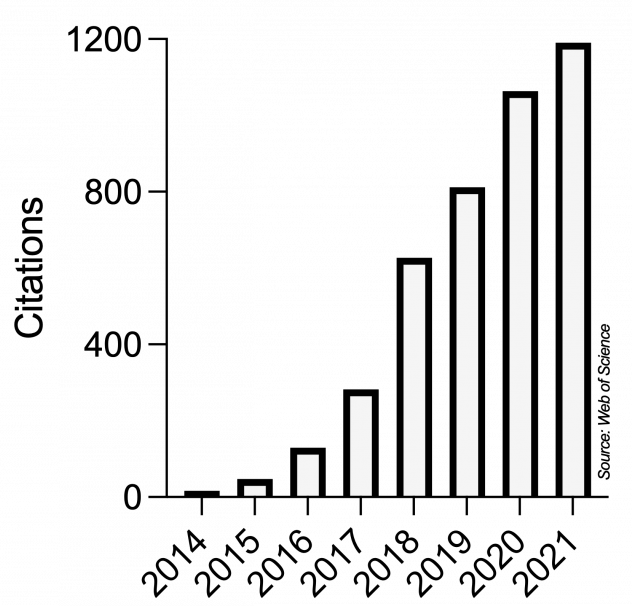
Ever since, Microbial Cell has very positively developed and strongly grown into a respected journal in the unicellular research community and even beyond. This scientific impact is reflected in the yearly number of citations obtained by articles published in Microbial Cell, as recorded by the Web of Science (Clarivate, formerly Thomson/Reuters):
The scientific impact of Microbial Cell is also mirrored in a series of milestones:
2015: Microbial Cell is included in the Emerging Sources Citation Index (ESCI), a selection of developing journals drafted by Clarivate Analytics based on the candidate’s publishing standards, quality, editorial content, and citation data. Note: As an ESCI-selected journal, Microbial Cell is currently being evaluated in a rigorous and long process to determine an inclusion in the Science Citation Index Expanded (SCIE), which allows the official calculation of Clarivate Analytics’ impact factor.

2016: Microbial Cell is awarded the so-called DOAJ Seal by the selective Directory of Open Access Journals (DOAJ). The DOAJ Seal is an exclusive mark of certification for open access journals granted by DOAJ to journals that adhere to outstanding best practice and achieve an extra high and clear commitment to open access and high publishing standards.

2017: Microbial Cell is included in Pubmed Central (PMC), allowing the archiving of all the journal’s articles in PMC and PubMed.

2019: Microbial Cell is indexed in the prestigious abstract and citation database Scopus after a thorough selection process. This also means that Microbial Cell obtains, for the first time, an official Scopus CiteScore as well as an official journal ranking in the Scimago Journal and Country Ranking.

2022: Microbial Cell’s CiteScore reaches a value of 7.2 for the year 2021, positioning Microbial Cell among the top microbiology journals (previously available CiteScores: 2019: 5.4; 2020: 5.1).

2022: Microbial Cell is indexed in the highly selective Science Citation Index Expanded™, which covers approx. 9,500 of the world’s most impactful journals across 178 scientific disciplines. In their journal selection and curation process, Clarivate´s editors apply 24 ‘quality’ criteria and four ‘impact’ criteria to select the most influential journals in their respective fields. This selection is also a pre-requisite for inclusion in the JCR, which features the impact factor.

2022: Microbial Cell is listed in the Journal Citation Reports™ (JCR), and obtains its first official Journal Impact Factor™ (JIF) for the year 2021: 5.316.Check Article Types and Manuscript Preparation guidelines. Submit online via Scholastica.